Vinyl 8: John Williams Malcolm Arnold, Leo Brouwer

De zon schijnt, misschien dat gitaarmuziek nu goed valt. Nog een oude LP, John Williams speelt het gitaarconcert opus 67 van Malcolm Arnold en het eerste gitaarconcert van Leo Brouwer, met de London Sinfonietta. Opnames uit 1977.

Het stuk van Malcolm Arnold heeft een paar fraaie passages in het langzame deel, en de gitaarpartij is mooi geschreven. De snellere delen vertonen een soort quasi-klassiekerige filmmuziekesthetica die ik onverteerbaar vind – het eerste deel vind ik onluisterbaar.

Leo Brouwer is zonder twijfel mijn favoriete gitaarcomponist. Zijn concert voor gitaar en klein orkest lijkt vooral een bewerking van motieven uit zijn briljante solostukken en dat pakt een stuk minder goed uit. Gitaar plus. Stukken vooruitstrevender dan Arnold, maar het gebruik van destijds vooruitstrevende compositiemethodes voor de orkestscore is ‘volgens het boekje’ – wat overigens betekent dat er best wat te genieten valt (hmm, heel fraaie zachte passage met bijna-drone voor trombone en strijkers (?)). Ik prefereer Brouwer voor gitaar solo. Hij denkt vanuit de gitaar en komt zo tot prachtige resultaten. Ik ken geen componist die hem dat nadoet of heeft nagedaan.

http://plum.cream.org/williams/records/035.htm

music,nl,vinyl | February 9, 2011 | 14:34 | Comments Off on Vinyl 8: John Williams Malcolm Arnold, Leo Brouwer |

Vinyl 7: Johnny Dyani Song for Biko

In de ‘studio’ aan het werk. Vinyl nummer zeven: Song for Biko (1978) van de Zuid-Afrikaanse bassist Johnny Dyani, met Don Cherry, Dudu Pukwana en Makaya Ntshoko. Met een losse ritmische aanpak die niet helemaal freejazz wordt, op het eerste gehoor vreemde bassfiguren, ostenati en tegenritmes van Dyani, melodieuze thema’s en meeslepend spel van Cherry en Pukwana. Mooi. Diep en ‘uplifiting’.

Van de hoestekst, Johnny Dyani: “I am a folk musician, and I don’t like to see my work described as jazz because it introduces connotations that I don’t regard as relevant”.

music,nl,vinyl | February 9, 2011 | 13:57 | Comments Off on Vinyl 7: Johnny Dyani Song for Biko |

0205 / 1.45

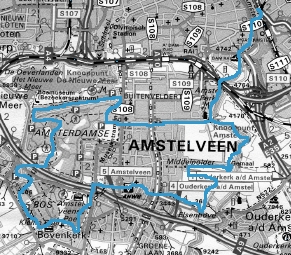
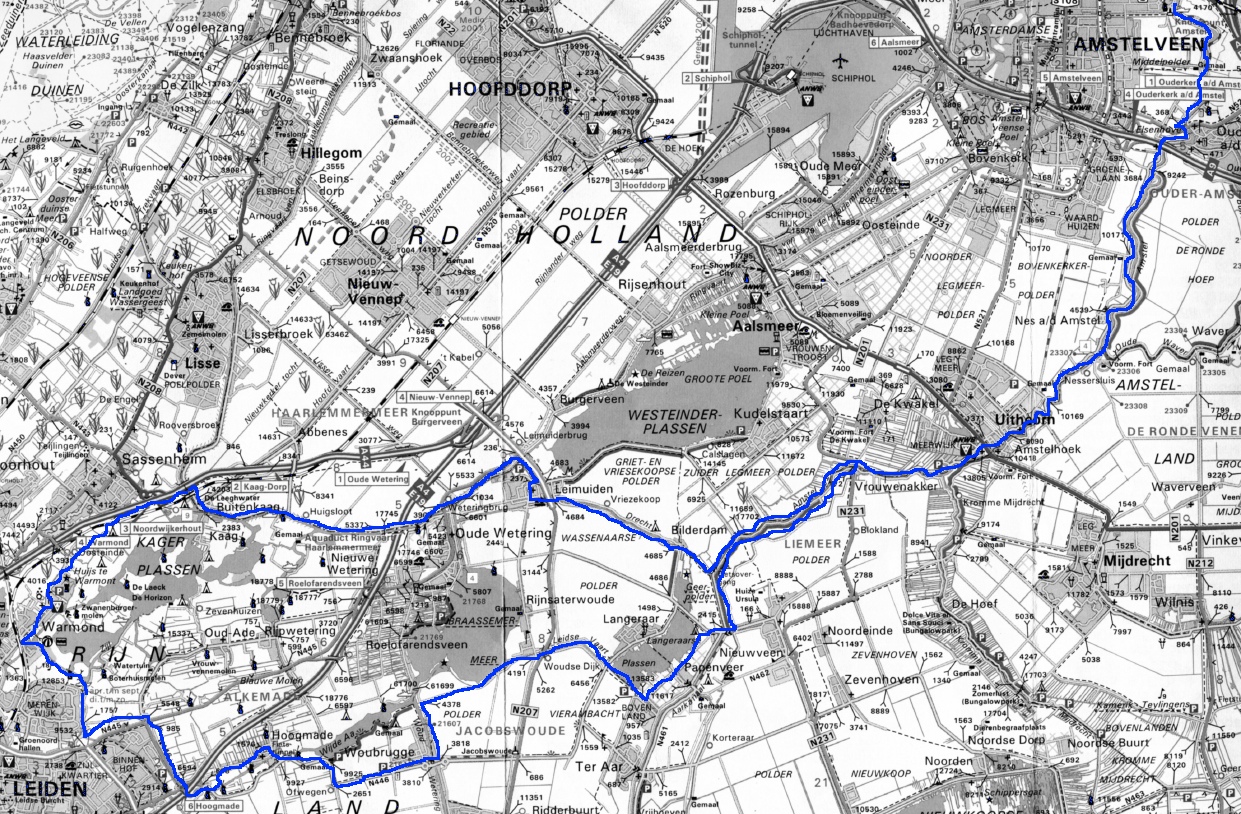
Zaterdagochtendrondje, 9.45 – 11.30. Bewolkt, 10 graden, en harde tot stormachtige en vooral lastige wind. In de stad en in de luwte viel er goed te fietsen, maar in het open land, en vooral met passerende auto’s en zijwind vond ik het lastig (je kreeg soms van die plotse klappen van de wind waardoor je een meter opzij vliegt). Vandaar dat ik 2x voor het nieuwe fietspad in het Amstelland koos.

Marcusstraat – Amstel – Langs de Akker – fietspad – Nesserlaan – Uithoorn – Nes – fietspad – Ouderkerk – Amstel – Marcusstraat

cycling,nl | February 5, 2011 | 15:54 | Comments Off on 0205 / 1.45 |

Vinyl 6: Bird and Pres, The ’46 Concerts, Jazz at the Philharmonic

Dubbel-LP waarvoor ik, als ik het me goed herinner, de volle prijs heb betaald. Historische live-opnames. Veel naar geluisterd, ook al klinkt de ritmesectie op veel tracks als ongenuanceerde tweekwartsklop en was JATP een veredelde jamsessie. Met Coleman Hawkins, Buck Clayton, Willie Smith, Dizzy Gillespie…. Electrifying indeed.

De werkelijke aantrekkelijkheid van deze muziek ligt in de ontmoeting tussen Bird & Pres. Lester Young op z’n aller-allerbest, en Charlie Parker in een swing-context waardoor des te beter te horen is hoe radicaal, vernieuwend en adembenemd de weg is die hij is ingeslagen. Dat kun je nog steeds voelen. Hij fietst er dwars doorheen, alsof een nieuwe dimensie zich ontvouwt. (Dat wonder, dat iets van 50 of 65 jaar geleden nog steeds ‘fris’ kan klinken).

http://www.jazzdisco.org/charlie-parker/discography/session-index/#460128

music,nl,vinyl | February 4, 2011 | 18:48 | Comments Off on Vinyl 6: Bird and Pres, The ’46 Concerts, Jazz at the Philharmonic |

Vinyl 5: John Williams Manuel Ponce

Ik heb een tijdje klassieke gitaarmuziek op vinyl gekocht. Ver in het cd-tijdperk, tweedehands, zo lang het maar een paar gulden per plaat was, liefst Renaissance of twintigste-eeuws. Dit is een opname uit 1978 van John Williams die stukken van Ponce (1882 – 1948) speelt. Had er jaren niet naar geluisterd, ben altijd gecharmeerd geweest van de stukjes van Ponce (die tot de top van de gitaarliteratuur horen), maar had nu toch even nodig om er echt in te komen. Harde wind, klepperende deuren en goederentreinen; niet helemaal weer en tijdstip voor klassiek gitaar. Klassiek gitaar is iets voor de vroege ochtend. Ik heb ergens een cassettebandje met andere uitvoeringen van deze stukken, die heb ik altijd beter gevonden. Soms lijkt het alsof je de stukken net iets vloeiender of ritmischer kunt (moet) spelen dan deze interpretatie van Williams.

http://plum.cream.org/williams/records/036.htm

music,nl,vinyl | February 4, 2011 | 16:47 | Comments Off on Vinyl 5: John Williams Manuel Ponce |

Vinyl 4: MoHa! jeff carey’s moha!

7”. 2008 productie van Moha! door Jeff Carey (supercollider3 & premix). MoHa! in meer gestructureerdere vorm – met als effect grotere fragmentatie. De sound is ‘dense’ en soms heel gelaagd. “A beautifully evil cartoon score – fractured and malevolent and funny” schreef The Wire. Live was het overweldigend, gebalde energie.

music,nl,vinyl | February 4, 2011 | 15:35 | Comments Off on Vinyl 4: MoHa! jeff carey’s moha! |

Vinyl 3: MoHa! Rock/OFF!

Wit vinyl, 7”. MoHa! – Olsen & Hana. Kant 1 in trash-pop-punk-rock ‘mode’ met zang, kant 2 impro-trash-noise met John Hegre als gast. 2006. Love the energy, speelplezier knalt ervan af. Niet bij te werken, goed als opkikker.

http://www.n-collective.com/files/moha2.html

(Hun eigen discografie vermeldt deze single niet).

music,vinyl | February 4, 2011 | 14:46 | Comments Off on Vinyl 3: MoHa! Rock/OFF! |

Vinyl 2: Radio Rood

Rood vinyl, uitgegeven in het kader van Radio Rood (2010) een conceptueel project van Moritz Ebinger over de betekenis van de kleur rood. Ik kreeg een exemplaar omdat Oorbeek in zijn programma zat, er staat een kort stukje van ons op de plaat (bezetting zo te horen drums, bas en zang plus effecten van Mark). (Afkomstig van studio-opnames voor een tweede CD, die er nooit is gekomen omdat we het over geen enkele track eens konden worden). Kan er nu eindelijk naar luisteren.

Het lastige bij dit soort platen is dat er vanalles op staat wat interessant is, veel gesproken woord en muziek die mijn aandacht niet kan vasthouden. Dan is het ineens lastig dat je bij vinyl niet met een drup op de knop een track kunt skippen of doorspoelen. Het vinyl ziet er prachtig uit, maar ik vrees dat ik de naald niet door de hele groef heb laten draaien.

http://www.radiorood.nl/

art,music,vinyl | February 4, 2011 | 14:20 | Comments Off on Vinyl 2: Radio Rood |

Vinyl 1: ultralyd: conditions for a piece of music

Sinds 1 februari heb ik 30 m2 ruimte extra: een werkplaats, een atelier, een studeerplek. Ongeveer de helft van mijn spullen verhuis ik in de komende tijd daarheen, boeken, gitaren, fietsen. In mijn werkkamer thuis – die dubbelt als logeer- en soms slaapkamer – gaan we een kamer voor R. bouwen. Het geeft me de gelegenheid om voor het eerst sinds jaren weer een platenspeler aan te sluiten op een versterker en luidsprekers. Ik ben van plan om door mijn platenverzameling heen te luisteren. Een echte verzameling kun je het niet noemen. Ik nam cassettebandjes op, ik heb nooit veel platen gekocht. Mijn ‘verzameling’ bestaat vooral uit wat goedkope en tweedehands jazz (bebop, hardbop, freejazz, Coltrane), aangevuld met wat meer rock-georienteerde avant-garde, en een klein beetje klassiek.

Het meest recent gekochte vinyl is hedendaags, een paar dingen van Morten Olsen. Zoals de eerste LP die ik oplegde: conditions for a piece of music van ultralyd (Olsen, Brandsdal, Hana, Moster) uit 2007. Voor zover ik weet allemaal doorgecomponeerde stukken, met een Feldmaneske benadering van het geluid, uitgerekt, trage tempo’s, lage bas, sustain. Olsen speelt behalve de drumkit veel vibraphone. Het materiaal is te vergelijken met dat van de drone rock, Stephen O’Malley-like, maar de uitvoering is ingehouden, en, tja, op structuur gericht (wat sfeer oplevert) in plaats van op het opwekken van een sfeer door een overload aan geluid.

Live was ultralyd overigens wel heel luid en hard. Zeker op die ene avond toen KTL (Pita & O’Malley) na hen speelde.

Ik vind de LP conditions for a piece of music ook vandaag nog altijd geslaagd en erg mooi en heb het idee dat in het terrein dat Ultralyd hier betreedt nog veel te ontdekken valt. Het is muziek die mij na aan het hart gaat. (De beschrijving op de site van Rune Grammofone meldt dat het lijkt op King Crimson anno 1973 – hmm. Not for me).

http://www.runegrammofon.com/artists/ultralyd/rcd-2065—ultralyd-conditions/

http://boomkat.com/cds/35185-ultralyd-conditions-for-a-piece-of-music

music,nl,vinyl | February 4, 2011 | 13:28 | Comments Off on Vinyl 1: ultralyd: conditions for a piece of music |

Imagine an Audience Day 2, 01022011, a semi-live report

This text is the rough version of the second part of a live-blog written during the conference Imagine an Audience at the Piet Zwart Institute in Rotterdam: Imagine an Audience. An edited and cleaned-up version will be published in due time on the website of the Piet Zwart.

The second day focusses more on filmmaking in the fine arts, and the strings attached to that… The first panel is moderated by Edwin Carels – who worked on preparing the conference and came up with the title: Imagine an Audience. As many in the audience were not present the first day and Florian kicks off with a short recap of the first day.

On the panel are John Smith, Luke Fowler and Michel Chevalier. Each one does a short presentation of 10 minutes, and “the real discussion and fighting” can be done afterwards.

Luke Fowler

Luke Fowler speaks with a beautiful Scottish voice and gives a brief introduction of his life as an artist. He has been quite fortunate to have his work shown both in art galleries and at film festivals. He always resisted the new media – the internet – as a way of distributing work.

One of his ‘seminal’ moments as an artist was a friend giving him a videotape of Wavelength by Michael Snow, and watching that in his flat in Dundee and feeling alienated – not knowing what to think of it, knowing nothing about it and feeling out of context. (VHS also not being the right format for the film). To him community is important to get to understand new ways of dealing with audiovisual content. Public British television in the ‘80s and ‘90s was also an influence, the documentaries shown there – a time before television programming declined. He saw the work of Douglas Gordon in Glasgow. At that time he was not involved in the discourse of video-art, not part of that community and he found much of the video art self-indulgent – he was looking for a way of making film that was less solipsistic, and would relate more to life. At that point he made his film What You See is What you’re at about a psychiatric experiment, a film constructed mainly from interviews, using materials available. He wasn’t too self-conscious of the form. Because there was no coherent narrative to it, it can be seen as challenging dogmatic ideas of documentary filmmaking.

Then his 10 minutes are over. He hasn’t even said a word about his later films.

Fowler says that seeing a film in the right format, showing in the intended way is very important for the experience. That is why he refrains from digital distribution. He is totally right in that. Speaking for myself, I would go to a good screening of his films, as I know the experience (especially in sound…) will be better than watching that digital copy of his A Grammar for Listening that I saw thanks to some Internet magic and human intelligence.

John Smith

John Smith starts by showing a 1 minute movie. The London Filmmakers Coop was where he started in the seventies, a time when many avant-garde artists were into making multi-screen works. Most of his work is made with a screening context in mind, intended to be seen from beginning to end, not from middle to middle – which is was often happens in art galleries. His first experience of having his work shown in a museum context in the seventies were not positive: bright lit rooms, shown as a loop on a video monitor, making it impossible for a viewer to follow the unfolding of the film, and the depth of it.

When he got the possibilities to show his work as an installation, his first impulse was to replicate a cinema black box in the gallery. It was a necessary inconvenience to show his work like that – instead of in a cinema. It was only in 2004, when 15 of his films were shown in Magdeburg as one exhibition, when his ideas changed. He was concerned about the 15 films playing as a loop and the soundtracks blending. When the exhibition was set up, he was pleasantly surprised about the effects (calling it ‘stereophonic recomposition’), and actually like the blending. It was made into a new experience. His films until then were very precisely constructed and had to be viewed from beginning to end, or else the experience suffered. Since then his films are more open ended.

He also went back to older films, and tells how he came to show one of his early strictly materialistic, structural films again, not as a 30 minute film, but as a two screen installation at the RCA in London – it becomes a spatial work, instead of a linear one.

Carels ask: isn’t it that you are now structuring installations and exhibitions, in the way how your early films were structural, and haven’t you become also a curator of your own exhibitions? Smith answers that yes, and he wants to stay in control.

Michel Chevalier

The third presentation is by Michel Chevalier, from Hamburg. He takes a meta-perspective he says, and will complement some of the historical things John Smith mentioned. Just like Smith he has written a text for the presentation, and he will kick some ass.

He criticizes the art world and the liberal market condition it is in and is depended on – the fact that contemporary art leaves itself at the mercy of a capitalist market. Okay, so he mentions Fluxus and video collectives from the sixties and seventies, which tried to change the situation of art being a bourgeois thing for bourgeois people. In the nineties we got Bourriaud’s rhetoric which rebranded (critical) art as relational art, which actually as another critic said translates as “micro-utopias for the happy few”. Emerging trends of filmmaking in the art field are, in his words, the theater of the sensibility (Barney), the Duchampian remix strategy and the Good Conscience Generators. None of which are ever stepping on the toes of curators, never are really critical, are never political, and always safely coopted in neoliberalism. He mentions lots of well-known big artists, artists who are actually part of what I would call the art market scene (Steve McQueen, Matthew Barney, Hito Steyerl). He criticizes the fact that art exhibitions often act as if they are critical, but are actually complicit of a political the economical system they claim to criticize. He fiercely criticizes the big curators and the empty, false curator speak (right on!), and curators acting as meta-artists, hardly paying attention to local and political contexts, and hardly being respectful toward the artists work by exhibiting work in way that soundtracks of videoworks are blending in such a way that one cannot even hear what it is about. (He’s a bit unfair here, there are curators who are pretentious meta-artists, there are also other examples).

Join the art world he says, when you want to combine your technological art with traditional crafts; are ready to follow the galleries outlines and economical models; can stomach denaturing your work by meta-artist curators; will toe the ideological line and support the critical retrenchment that banks and millionaires want; and will produce works that will pleasantly integrate in the domestic interiors of art collectors.

Carels: so nothing has changed since the 18th century.

Michel Chevalier: yes.

I’d say Chevalier is right on a lot of things, but hey, the world is not one-dimensional. And also, he is mainly talking about the contemporary visual art gallery world which is or hopes to be part of the art market system. That system does exist, it’s the star system, and it’s only such a small part of art…

No fighting?

John Smith reacts: he almost completely agrees with Chevalier, and it is a real worry for him. The question for him is: as someome who makes films, he wants people to see it, and that is why he shows it also in the arts world. People do come to see. It can open the eyes of some of the audience. Television (channel four in Britain) used to have such a role: opening the eyes.

Luke Fowler: sadly enough what Chevalier is saying is very familiar to me. He enjoyed his talk, though he thinks it is a bit forced rant. He is well familiar with the sociological work of Bourdieu – whose ideas on ‘cultural distinction’ Chevalier’s rant was based on. His critique is that it basically repeating the structure of art, and is homogenizing the art world, and does not go into all the other strands that exist. Later he adds that Chevalier’s picture is very bleak and not representative, there are better practices, and he has had better experiences.

Chevalier responds that there is indeed another art world, and that he also sells dvds. He does not see the art world as a solution for film funding. Not at all. In the arts scene everything is about fashion, and so film funding from the arts world is just another flavor of the month. And yes, the real problem he is addressing is capitalism. (He is right. And what he is really after is making a case for an art that makes us see the world in a fundamental different way, with other eyes, and not art which plays along the rules of the powers of neoliberalism).

More discussion

Someone (Pip) from the Film Gallery in Paris asks if the filmprint could ever function as a commodity, and how much they should be worth.

John Smith answers that some of his films (shot on celluloid) have to be shown as film, but there are many of his old films that he now prefers to show in a digital format. He is, as an artists, not too interested in selling limited editions, but when a gallery does want to make an edition, he approaches it actually as an archiving thing: let the Tate have a negative print, so it is also there (and not only in his house).

Luke Fowler responds: there are no co-ops of artists, there are no regulations about how much a print should be paid for, there are at the moment sadly no alternatives to the way galleries deal with this. It is a harsh world. It is not that there are no alternatives possible, but at the moment they do not exist.

Carels, after Cramer summarizes the history of media and distribution from movable type till now, mentions that the art world is the only world that still uses 16mm celluloid and slide projectors. And he mentions how for artists nowadays the use of media is hybrid, fluid.

From the audience, it is stressed that we have to talk about rights – and the arts world has to become smarter in that. There is a difference between the license of showing a film, or of selling it. There is celebrity culture in the art market that complicates this. So not the material aspect is important, (for the economical issues( but the immaterial side of it. She is right I would say.

Then there is talk about crowdfunding. A young filmmaker thinks that it can work, and mentions the example of two photographers who released already 2 books on Sotchi using crowdfunding. (I think he means Rob Hornstra) The panel gives several other examples of artists asking for money to produce works: Brakhage (who was very poor) and Jean Renoir. Luke Fowler is sceptical about it too, especially because it will not favor critical, exciting and different ways of art. Cramer also voices his scepticism: these uses of the Internet tend toward a mainstreamy consensus.

The conventional funding of film is a world past

The last panel and round discussion is moderated by Simon Pummell. The panel has two speakers from the television and film world who first do a short presentation. Pummell introduces Michel Reilhac of Arte and as producers who have an interest in new and innovative forms.

Michel Reilhac

Reilhac starts by mentioning that there is according to many people in the media world, there is no economy for independent filmmaking anymore. It is dead, or a hobby culture. It is particularly true in the USA. He thinks that telling a story through moving images will not die, as it is what makes us human. So the problem is not there, but is in the ‘interface’. There is no economy to independent filmmaking, it only survives in Europe thanks to sophisticated public funding. Europe can pretend there is a viable economical environment for it, but it is an artificial system, this type of independent filmmaking takes place in a bubble, and independent filmmaking in the world – except Europe – operates in a vacuüm.

Festivals are successful, because films are still best seen at a big screen, and there is enough of an audience for it. (And a festival is often the only chance to see a movie in this optimal way). But economically it’s not viable.

At Arte he sees a drastic decline in funding film as well. The same films get twice as little money as a few years earlier.

He is a great fan of transmedia storytelling, not only because of the new aesthetic possibilities. (Transmedia takes the making of the film or narrative for various platforms at conceptual level – not, as in crossmedia, the same narrative or film, only presented in different formats and forms, and distributed in various formats). He likes the transmedia approach also as a solution to funding, as you are able to tap into different funding possibilities and especially branding (devising branding strategies with industry without making it into an advertising campaign). As a producer he sees great possibilities for using transmedia to publicize a linear feature film.

Problem with this is, I think, apart from the talk about advertising and branding: any real transmedia production is more complex and larger than just a feature film… What we are talking about, I am afraid, is really crossmedia, where the story of the game is also made into a feature film, or a television show, or actually just a sophisticated marketing approach, making sure the merchandise is as good as the movie, or is integrated with it.

But of course, it is an interesting approach, Arte France will set up a funding scheme for it. Reilhac sees it as a necessity, as the standard model is ‘dead’. The transmedia approach needs other partners, and different ways. As the internet is the major interface for the public to get to know independent film.

Keith Griffiths

Keith Griffiths runs a company with Simon Field – former director of IFFR. He produced for instance most films by the Brothers Quay. He starts with saying that he wanted Reilhac to talk first, as Reilhac is an utopian, whereas he is rather old fashioned and misanthropic. He comes out of a television generation, and he still has the television on the whole day… he says humourously. He heard someone on television distinghuising 5 types of cinema: blockbuster (economical viable); commercial feature films (under threat); the minefield; the real dangerzone, and then low budget. At low budget end there are still millions of possibilities….

He gives the example of how he went about producing the film of Apichatpong Weerasethakul: they made sure that a book was published at the same time, that a short film was published on the internet and an installation in an arts gallerly. Various worlds were involved into the making of the film. The budget was small, 600.000 euros – and through how they did it, it did bring in money in the international world.

Also for later projects he used this approach, by bringing in different worlds – having Time Out as a partner, getting a book published, have events at museums with audience participation et cetera. He does it for the Museum of Loneliness – which is using all low budget strategies. The installation is partnered by the art world, flip camera’s for an audience participation internet project are the only real costs of it.

His last word: the conventional funding of film is a world past.

Reilhac reminds us of the fact that theater owners still have the power in the cinema world. A film, we still seem to think, does not exist till it has been shown in cinema. And it is 3 or 4 months after a theatrical release we can offer it to pay per view services on the internet. It is wise not to approach film in this way anymore and doing it differently. It is possible, but it comes at the cost of getting out of the old cinema world, which is still a risky thing to do.

Griffiths agrees that it is a fragile situation. The US release of the Apichatpong Weerasethakul production will come 9 months after the first release, and the US is flooded with pirated Korean dvds of the film.

Discussion

The discussion is then opened up also for Davanzo and Lisa Marr of Echo Park Film and Mervin Espina. Marr tunes in with saying that it is interesting times for film but in the first place because film equipment and also distribution can be in the hands of the people.

Griffiths speculates if festivals should not become smaller, dissassemble themselves (as the Edinburgh festival does under Tilda Swinton), and bring film closer to people, away from the few cities where festivals take place.

Reilhac: filmmaking is now a process, not a product. We now have to see how each film is a step in the process of developing a vision, it does not stop with the ‘product’. This is particularly true of activist documentary makers. He also states that the filmworld has to embrace the computergame world. (Hmm, true, but hasn’t it done that already, if it hasn’t, then that’s really funny.)

There is more talk of crowd financing. Funny, after two days it begins to seem as if the world is full of crowd financing successes. as different people refer to a successful project – but how many successful attempts is that on a whole?

Florian Cramer mentions the problems of the term transmedia, as it is used here in quite a different way than at the Transmediale-festival which runs at the same time as the IFFR and has pretty much no overlap at all with what is said at this conference. Also unfortunate is, according to him, the grafting of the word storytelling to transmedia, as it takes away the fact that most transmedia-works are not narrative. (He has an important point there – one which is heavily discussed for instance in the whole narratology versus ludology-debate, and goes down to the question what the limits of narrative are. Some people like to call any type of sequence narrative.)

Pummell tunes in, and – rightly? – says that that’s a different conference.

From the audience we get an account from South East Asia. It is interesting to hear that in China, as internet downloading is shut down, there are more and more cinema’s built.

Michel Chevalier is disquieted by the presentations – as they ask the film world to adapt to the economy, whereas he believes film makers should go and have their voices be heard. Do not conform to the market but fight for public funding, for a democratic agenda for cultural policy. He wants film to have critical independence and all of what we heard earlier in this conference is going against that, he says. (And most transmedia, he adds, – especially when it concerns branding – is infantilization.)

Michel Reilhac responds that he is right in principle and that this is characteristic of the tensions of our time. Also in Arte, neoliberalism is very strong, and he himself might be over-pragmatic in dealing with it, but he disagrees that filmmakers therefore should go into lobbying for public funding. It is on a different time span. Embracing the game culture is not infantilization per se. And the younger generation relate to storytelling via games rather. He just wants to take the reality into account. He cannot afford to stay in his cinephile bubble. At Arte almost no-one is watching the experimental film slot, which is under constant threat.

(By the way: I do want to watch the experimental film slot of Arte, but there is no podcast nor downloads for it that I, in the Netherlands, can watch. I have no satellite dish nor cable television and no intention to get one of those, as they offer hardly any interesting content, and in the world of online content I find other stuff).

Pummell states that the discussion of transmedia is about the possibilities of new forms, but also about new possibilities for branding and advertising. The way the film world approaches transmedia, I’m afraid, mainly sounds as a marketing strategy which heavily influences the form and content of the audiovisual narrative.

Cramer reacts that from what he hears from this panel is that the story is bad for traditional film makers (and students of film academies) who are used to work with budget of higher than 100.000, whereas microcinema thrives. The problem is that this traditional old film world, a film industry – which in Europe still thinks it has to compete with Hollywood – is still in place, which makes it difficult to ‘see’ that the situation has changed enormously.

Lisa Marr says that there are many different kind of cinema, and it’s up to us to find our own voices in film making, show films, and celebrate the community of watching film.

Which is, in the end, what it’s about.

Pummell says that this panel was in fact about a middle ground of film making – not overtly commercial, and also not just for a community of filmmakers, and also not part of the crudest forms of global capitalism.

Here the discussion should have been wrapped up, but it went on, discussing mostly matters of finance. Reilhac reminded us of the fact that half of the film producers does not make a living from producing films. For him the question of the panel was: how to develop a film culture that allow people to make a living of making film, low budget film as well. And not going to a situation where film making is a hobby. (Well, most writers do not live from their writing, and certainly not from their books – many artists do not live from their art, et cetera. What’s new?)

Maybe the last panel was a bit too removed from the other three. It might have tried to go into subjects as transmedia production, but in that respect it sounded like a voice from the past, desperate to catch up with a world which has already changed. Like Pummel, I also respect the ‘middle ground’, the ‘quality programming’ for larger audiences, and I certainly find the decline of it deplorable, but I am afraid that this middle ground now hardly reaches the public it could reach, or thinks it is producing for. People see other stuff – some of it is microcinema, and what is not microcinema, often comes from a torrent. The middle ground seems to lacks cultural dynamics – it is caught in a prison of the past. There’s enough initiatives and makers that have adapted years ago. Sure Griffiths approaches the production of film skilfully and creatively, using all the means possible. Problems of how to fund the content creation, how to fund art will always exist… In the end, there was too much talk about funding, maybe if the last panel would have approached the issues from the content and artistic side, it would have less sounded like a voice from a declining culture, struggling to adapt to a changed world and a transformed film culture.

blogging,en | February 3, 2011 | 13:57 | Comments Off on Imagine an Audience Day 2, 01022011, a semi-live report |
« Previous PageNext Page »
This work is licensed under a Creative Commons Attribution-NonCommercial-ShareAlike 2.5 License. | Arie Altena