Language and the Internet

Recently read (or better ‘read thru’) David Crystal’s Language and the Internet (originally 2001, updated second version 2006). I’d never picked that one up. It is a good overview of the various aspects of online language use, from creative spellings in chatrooms, via the writing style of bloggers up to influence of spellcheckers, search engines and the language problems surrounding the Semantic Web. It is a survey of the Internet from a linguistic perspective. I find myself generally agreeing with all his points — I take a positive approach to language online as Crystal does.

He writes:

“I do not see the Internet being the death of languages, but the reverse. I view each of the Netspeak situations as an area of huge potential enrichment for individual languages.” p. 275

And his final sentence:

“The arrival of Netspeak is showing us homo loquens at its best.” p. 276

So hmm, I do not have a lot to say about this book. (Except that I find the term Netspeak extremely ugly.) Also because I am more interested in writing style, literature, media theory, and less in language use in e-mail, chats, sms-dialogues and programming.

So I cut-n-paste together just one passage about the importance of blogging. Crystal gives two examples of blogging and describes the spontaneous writing style of a blog post, he writes:

“Here we have examples of a style of writing which has never been seen in public, printed form, outside of literature, and even there it would take an ingenious novelist indeed to capture its innocent spontaneity and unpredictable thematic direction. It is difficult to know how to describe the style, because it falls uneasily between standard and non-standard English. Both extracts illustrate writing which is largely orthodox with respect to the main dimensions that identify standardness — spelling, punctuation, and grammar, but they depart from the norms in various ways. (…) There are several feattures of informal written English which would be eliminated in a copy-edited version of such texts for publication. (…) Before the emergence of standard English, of course, such a style would not have attracted any notice at all. (…) It is a style which was once the norm, for all kinds of writing, but which gradually went out of public use once the standard language was institutionalized in manuals of grammar, punctuation and usage, beginning in the second half of the eighteenth century. It was finally eliminated when publishers developed copy-editing procedures to ensure that their newspapers, magazines, and books conformed to an in-house style. After that point it was virtually impossible to see anything in print which had not been through a standardizing process. (…) And this is why blogging is so significant. Only here do we have the opportunity to see written discourse of sometimes substantial lenght which have had no such editorial interference. It is written language in its most naked form.” p. 244/245

Crystal, David, 2006. Language and the Internet, second edition. Cambridge: Cambridge UP.

(This actually begs the question of how different bloggers deal with copy-editing individually. Some do copy-edit (especially the professional journalists), others write-as-if-they-speak and just leave the inconsistencies and errors. I’d say the level of editorial reflectiveness (is this a clear term?) differs enormously. Yet anyone writing will develop some sort of editorial relfectiveness in the long run. If only of the sort where it becomes the conscious decision to leave errors as they are.)

blogging,en,quotations,research,ubiscribe,writing | October 2, 2008 | 15:11 | Comments Off on Language and the Internet |

The medium is the massage: an inventory of effects

Booklet full of aphorisms. Oh-so quotable. I find myself wanting to use these quotes again and again. They are attractive. The attractiveness should not blind us. It will not, after so many years, I guess. The quotes are good to make a seminar or class attractive. Still. Together with the images.

So here, for future use. A digest.

“The medium or process of our time — electrical technology — is reshaping and restructuring patterns of social interdependence and every aspect of our personal life. It is forcing to reconsider and re-evaluate practically every thought, every action, and every institution formerly taken for granted. Everything is changing — you, your family, your neighborhood, your education, your job, your government, your relation to “the others”. And they are changing dramatically.” p. 8

“Electrical information devices for universal, tyrannical womb-to-tomb surveillance are causing a very serious dilemma between our claim to privacy and the community’s need to know. The older, traditional ideas of private, isolated thoughts and actions — the patterns of mechanistic technologies — are very seriously threatened by new methods of instantaneous electric information retrieval, by the electrically computerized dossier bank — that one big gossip column that is unforgiving, unforgetful and from which there is no redemption, no erasure of early “mistakes.”” p. 12

(This bit is followed by: “We have already reached a point where remedial control, born out of knowledge of media and their total effect on all of us, must be exerted.”)

“All media work us over completely. They are so pervasive in their personal, political, economic, aesthetic, psychological, moral, ethical, and social consequences that they leave no part of us untouched, unaffected, unaltered. The medium is the massage. Any understanding of social and cultural change is impossible without a knowledge of the way media work as environments.” p. 26

“The dominant organ of sensory and social orientation in pre-alphabet societies was the ear — “hearing was believing.” The phonetic alphabet forced the magic world of the ear to yield to the neutral world of the eye. man was given an eye for an ear.” p. 44

“Western history was shaped for some three thousand years by the introduction of the phonetic alephbet, a medium that depends solely on the eye for comprehension. The alphabet is a construct of fragmented bits and parts which have no semantic meaning in themselves, and which must be strung together in a line, bead-like, and in a prescribed order. Its use fostered and encouraged the habit of perceiving all environments in visual and spatial terms — particular in terms of a space and of a time that are uniform, c,o,n,t,i,n,u,o,u,s and c-o-n-n-e-c-t-e-d.” p. 44

“Printing, a ditto device (…) created the portable book, which men could read in privacy and in isolation from others. Man could now inspire — and conspire.” p. 50

“(T)he printed book added much to the new cult of individualism. The private, fixed point of view became possible and literacy conferred the power of detachement, non-involvement.” p. 50

“Ours is a brand-new world of allatonceness. “Time” has ceased, “space” has vanished. We now live in a global village . . . a simultaneous happening. We are back in acoustic space . We have begun again to structure the primordial feeling, the tribal emotions from which a few centuries of litercy divorced us.” p. 63

“Electric circuity profoundly involves men with one another. Information pours upon us, instantaneously and continuously. As soon as information is acquired, it is very rapidly replaced by still newer information. Our electrically-configured world has forced us to move from the habit of data classification to the mode of pattern recognition. We can no longer build serially, block-by-block, step-by-step, because instant communication insures that all factors of the environment and of experience co-exist in a state of active interplay.” p. 63

“Print technology created the public. Electric technology created the mass. The public consists of seperate individuals walking around with separate points of view. The new technology demands that we abandon the luxury of this posture, this fragmentary outlook.” p. 68/69

“The invention of printing did away with anonimity, fostering ideas of literary fame and the habt of considering intellectual effort as private property. Mechanical multiples of the same text created a public — a reading public. The rising consumer-orientied culture became concerned with labels od authenticity and protection against theft and piracy. The idea of copyright — “the exclusive right to reproduce, publish and sell the matter and form of a literary or artistic work” — was born.” p. 122

From: McLuhan, Marshall and Fiore, Quentin, The medium is the massage: an inventory of effects, Corte Madera, CA : Gingko Press, 2001 (1967).

en,quotations,research,ubiscribe | October 2, 2008 | 14:11 | Comments Off on The medium is the massage: an inventory of effects |

The end of television — for me

The long expected end of old-fashioned television, television watched on a television monitor, has arrived in my house. Two days ago the receiver for digital television broke. Probably it’s still under guarantee, but it was reason enough to end the subscription to Digitenne.

I took the subscription only to watch the cycling on Belgian television. But even for that it is not worthwhile anymore. To be honest, I simply hardly ever had or took the time to relax and watch a full race. How much I enjoyed Robert Gesink riding in the Deutschlandtour (2007), Paris-Nice, the Dauphine and the Vuelta! yes I did, but what I saw where snippets, bits and pieces, fastforwarding the videotape.

The rest of the channels mostly bring rubbish. What’s worthwhile to watch I can see online. There are no public English, French or German channels in the Digitenne-subscription.

I will go for another experiment: getting my dose of watching cyclingraces through the internet. I go for the clips at Studio Sport, for the bits and pieces uploaded on Youtube, I hope to find torrents with full races (tips anyone?), and maybe even pay for some at cycling.tv.

Hey, and I’ll watch them on the Eee Pecee.

cycling,en,research | October 2, 2008 | 10:57 | Comments (2) |

Eee Pecee

Give me a cheap laptop with wifi. Just for typing text, checking e-mail, reading. I do not need 200 gigabytes for storage (I have seperate harddisks), I do not need fancy programs. I want a text-editor and long battery-life.

With the current trends — like the 100-dollar laptop — it seems that finally the market is catering to my desire…

But then for once, behave accordingly… you think. (Except for books I hardly ever buy unnecessary things. I do not need a new computer).

L. said: ¨Why don you buy one of those mini-laptops? You can even install OSX on them. Take mobile internet, that’s also just 20 euro’s a month now. It’s just what you need¨

Yesterday I bought an Asus EEE PC. The smallest one. I am writing this post on it.

It’s incredible. It’s ridiculous. F. said: “But it’s a toy!”

It feels like a cheap toy. But the cheap toy is so powerful that it just delivers all you need, fast internet, listening to internetradio, watching television, all the websites. Everything is there. Weighs less than a kilo.

I am sure it is much more powerful than I now realize. It has a full Linux-installation and KDE. It’s a while since I used Linux, and the ASUS-launcher that is built on top of it is yes easy to use. Yet it closes off clear access to everything else. (Actually just somewhere on the last page of the manual there a sentence that tells you how to open a terminal from the launcher). So I haven’t figured out how to install new software, and even haven figured out yet where the simple texteditor lives. The computer has OpenOffice, but I prefer a simpler editor for typing. Because I tried out pico in the terminal, and saved a text, and then opened that text by clicking the icon the simpler editor started – but it’s not part of the Asus-gui. No idea where it is.

Of course I checked out how to install OSX. I must say I am a bit daunted by it. It’s something for people who like to spend an evening or two tinkering. I will leave it. Linux is also fine.

There is another reason for not installing OSX.

I thought this Eee Pecee would be for typing, and for on the road. (That will be so good. No spinning harddisk, just all cheap stuff, light and small, not luxurious at all. It means carrying it around without any worries).

But actually, this computer foremost ressembles a portable transistor radio. When cooking you take it to the kitchen to have a bit of music. Or you sit down to watch the news in between. (It’s a radio with television and internet-capabilities). Or to Skype. (It’s a telephone too).

It’s like a radio because the wireless connection is the center of this machine.

So no OSX because a lot of the ‘internet television’ works so much smoother under Linux compared to on a Mac. And the screen is actually quite nice to watch clips fullscreen.

A-and, typing on the small keyboard is okay for me (I have small fingers).

en,free publicity,software,ubiscribe | October 2, 2008 | 10:40 | Comments (2) |

The Complete Arista Recordings of Anthony Braxton

At the moment my blog is only recording my bike rides. Excuses? No.

But do check out this: The Complete Arista Recordings of Anthony Braxton, published by Mosaic, 8 cedees, classic stuff: http://destination-out.com/?p=205.

free publicity,music | October 1, 2008 | 13:51 | Comments Off on The Complete Arista Recordings of Anthony Braxton |

48 / 1.55

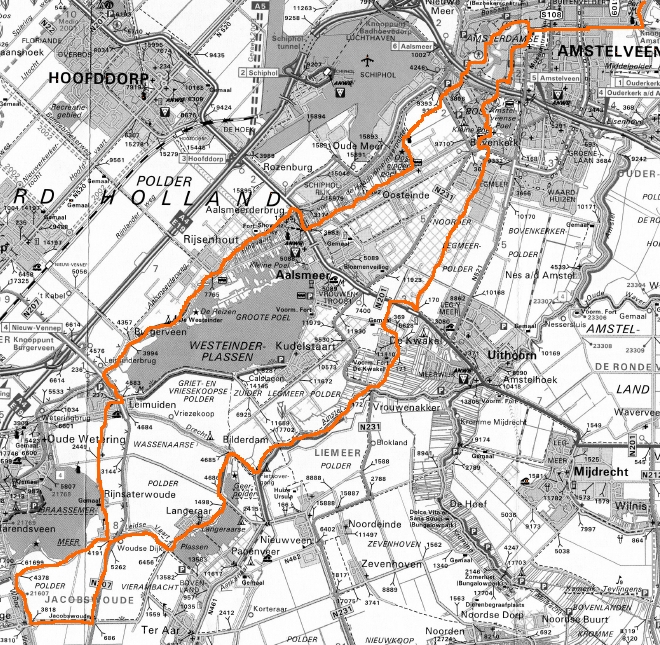
Zondagmiddagrondje, 16.30 – 18.30. Nog een dag prachtig nazomerweer, zon, iets meer wind en een paar wolkjes, 20 graden. Had wel langer willen fietsen, maar verkoudheid zit me nog steeds dwars. Toch is dit ook wel een mooie reeks: 4 dagen op een rij, steeds een ander lusje.

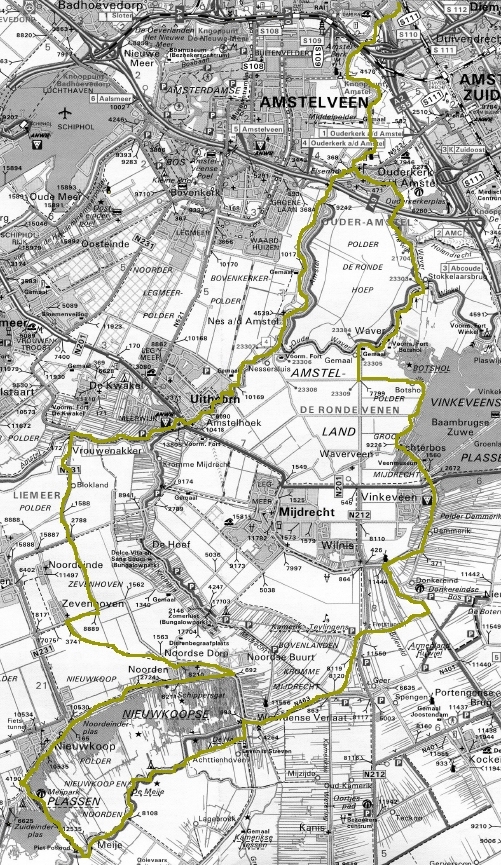
Marcusstraat – Amstel – Ouderkerk – Nes – Uithoorn – Vrouwenakker – De Kwakel – Vrouwentroost – Aalsmeer – Aalsmeerderbrug – Oude Meer – Amsterdamse Bos – Kalfjeslaan – Amstel – Marcusstraat
cycling,nl | September 28, 2008 | 22:09 | comments (1) |

40 / 1.32

Zaterdagochtendrondje. Prachtig nazomerweer, temperatuur oplopend naar 20 graden, onbewolkt en nauwelijks wind.

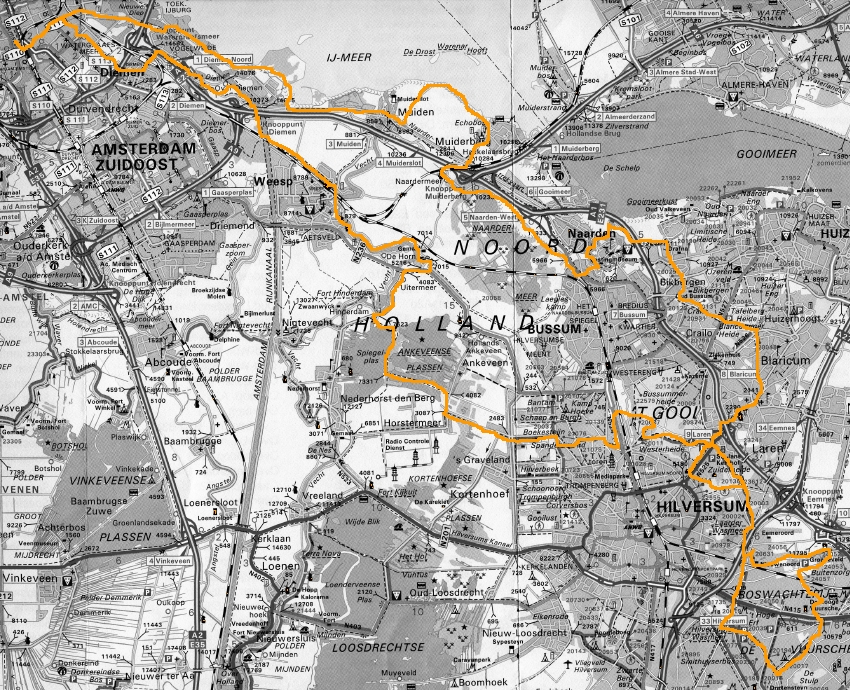
Marcusstraat – Weespertrekvaart – Gaasp – Weesp – De Horn – Naardermeer – Visserijpad – Ton Storkpad – Vecht – Muiden – blokje Muiderslot (brug open) – Diemerpark – Ringdijk – Marcusstraat

cycling,nl | September 27, 2008 | 22:23 | Comments Off on 40 / 1.32 |

41 / 1.43

Vrijdagmiddagrondje, 15.30 – 17.15. Prachtig en rustig nazomerweer. Warm en een beetje noordenwind. Rustig gereden en van de zon genoten.

Marcusstraat – Schellingwouder brug – Durgerdam – Uitdam – Zuiderwoude – Broek in Waterland – ‘t Schouw – Zwarte Gouw – Schellingwouder brug – Ringdijk – Marcusstraat

cycling,nl | September 26, 2008 | 22:18 | Comments Off on 41 / 1.43 |

34,7 / 1.17

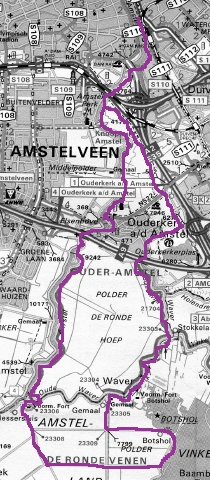
17.45 – 19.05 Ronde Hoep, heerlijk nazomerweer, oostenwind, laagstaande zon, 16 graden (maar voelde warmer).

cycling,nl | September 25, 2008 | 23:41 | Comments Off on 34,7 / 1.17 |

84 / 3.30

Zondagmiddagrondje. Prachtig weer. Eerst zonnig, later ook wat wolken. Lekkere temperatuur. Perfect nazomerweer – behalve dan dat het overal druk was met mensen die eropuit trokken (bij Spaarndam stond het verkeer zo vast dat je er zelfs met de fiets niet door kon – behalve dan wanneer je je fiets boven je hoofd optilde en tussen de vastgereden auto’s doorliep). In Amsterdam was het autovrije zondag: daarom 2x door de stad gereden. Op de heenweg verzeilde ik achter de tramremise bij het Olympisch stadium: ik was daar nog nooit geweest.

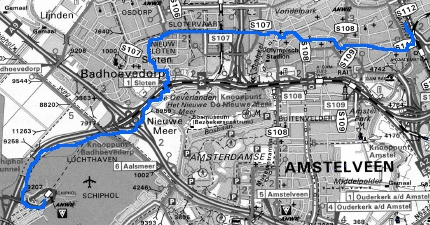
Marcusstraat – Churchilllaan – Stadionkade – Plesmanlaan – Sloten – Badhoevedorp – Lijnden – Boesingheliede – Vijhuizen – Cruquius – De Glip – Groenendaal – Leyduin – Aerdenhout – Kraantje Lek – Brouwerskolkpark – Overveen – Kopje van Bloemendaal – Duin en Kruidberg – Driehuis – Velsen-Zuid – kanaal – skiheuvel – Spaarnwoude – Spaarndam – Brettenzone – Westerpark – Nassaukade – Amstel – Marcusstraat

cycling,nl | September 24, 2008 | 22:30 | Comments Off on 84 / 3.30 |
« Previous PageNext Page »
This work is licensed under a Creative Commons Attribution-NonCommercial-ShareAlike 2.5 License. | Arie Altena