In 1995 maakte ik een zesdaagse fietstocht door Noord-Engeland. De zomervakantie liep ten einde en ik was, zoals wel eerder, nog helemaal niet weg geweest. Terwijl ik toch een goede vakantiefiets had — een Giant Custom 2000 — fietstassen en een tent. Op het laatste moment boekte ik een overtocht met de veerboot naar Newcastle. Op 29 augustus fietste ik naar IJmuiden, de boot op, en na een vreselijke avond en nacht (het stormde), de boot af, Newcastle in.
Het is natuurlijk hachelijk om 13-en-een-half jaar na dato de exacte route van een fietsvakantie te reconstrueren. Ik heb wel aantekeningen, maar die zijn vrij summier. Ik heb ook nog de kaarten die ik gebruikte, maar ik heb geen route ingetekend en maakte destijds nog geen routekaartjes voor onderweg.
Toen ik het plan opvatte om kaartjes van die fietsvakantie te maken, besloot ik mijn weerzin tegen Google-maps te overwinnen. Ik maakte een account aan bij bikely.com, een van de vele communities die gebruik maken van Google-maps om fietsroutes te delen. Ik kan me voorstellen dat het handig is als je een GPS-apparaat hebt, maar het handmatig intekenen van de route is niet echt handig (fouten herstellen is lastig). Bovendien is het kaartmateriaal niet aantrekkelijk. Niet mooi om naar te kijken. Een nauwelijks opgemerkt probleem is dat het kaartmateriaal altijd up-to-date is: ik er reed in 1995, niet eergisteren. Natuurlijk is het fantastisch dat je hoogteprofielen kunt genereren, en ik geef toe dat het switchen naar satellietbeelden wel veel informatie geeft over omgeving en een indruk geeft van de zwaarte van de route.
Maar omdat ik niet zo graag meedoe aan het bijdragen aan makkelijk te analyseren massa-data-verzamelingen, en liever zelf op mijn eigen primitieve manier materiaal publiceer heb ik toch weer scans gemaakt, verkleind, in 256-grijstonen opgeslagen en met een kleurtje de vermoedelijke route ingetekend. Met alle slordigheden vandien. Daar heb ik ‘lol’ in: kijken naar een tweedimensionale landkaart laat mij dromen. Als ik aan het speuren ben op Google-map, inzoom, scroll, dan ben ik op data uit en verzamel ik informatie. Dan droom ik niet.
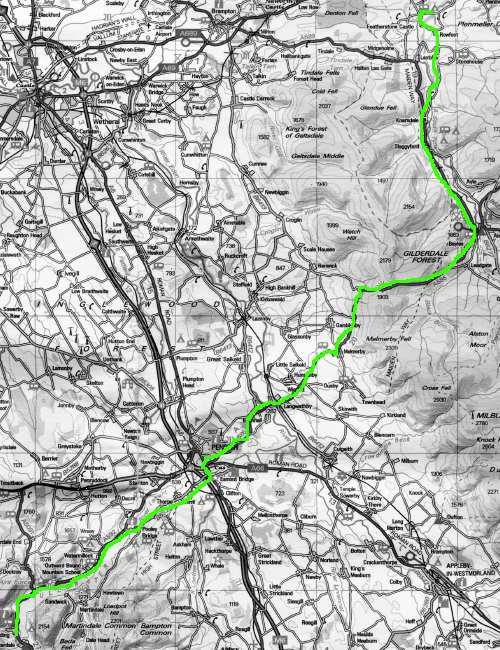
30 augustus 1995: Newcastle – Haltwhistle
Ik heb niet genoteerd hoeveel kilometers ik die dag heb gereden. De route ging dwars door Newcastle — links rijden ging meteen goed, ik vergiste me alleen bij de allereerste rotonde — en dan over de weg langs de Hadrian Wall tot even voorbij Haltwhistle waar ik een leuke camping vond. Het was een zware dag door fikse tegenwind — ik moest regelmatig terugschakelen naar 38 x 24. In afdalingen haalde ik nauwelijks 20 km/u. Zon en grijze wolken. Maar op geen van de Engelse klims hoefde ik af te stappen.
1995_08_30.jpg
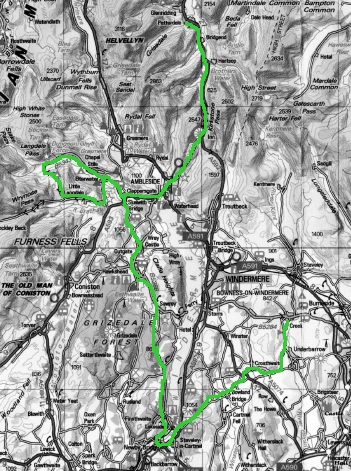
31 augustus 1995: Haltwhistle – Glenridding 84 km / 4.35
Prachtige route. Vaak afgestapt om van het landschap te genieten. Deel van de route is de Hartside Cross, een zware klim die deel uitmaakt van de BIG: http://www.challenge-big.eu/. Vond een trekkerscamping aan de voet van de Kirkstone Pass. De mensen naast me nodigen me (zij: social worker, hij: decorbouwer voor The Wooden Trousers) uit om ook nog met hen mee te eten (al heb ik al gegeten). Een gezellige avond.
1995_08_31.jpg
1 september 1995: Glenridding – Crook 67 km / 4.06
Ik kan mijn route van deze dag niet reconstrueren. Ik weet nog wel heel precies dat mijn plan was om op 1 dag de Kirkstone Pass, de Hardknott Pass en de Wrynose Pass te rijden. Met bagage. Dat heb ik niet gedaan. Ik reed de eerste zeven kilomter van die dag in precies 1 uur en kwam zonder een keer af te stappen boven op de Kirkstone Pass. (Ook een BIG). Daar besloot ik dat het wel mooi was met de zware klims. Ik reed nog wel richting de andere passen, maakte een mooi rondje en hield een lange pauze om een prachtig uitzichtpunt. Daarna met een bocht om het meer, en via een zware klim naar een niet zo leuke camping bij Crook.
1995_09_01.jpg
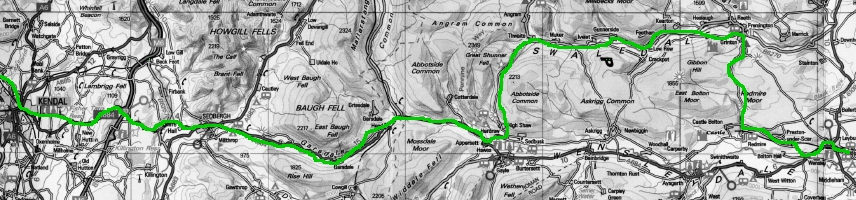
2 september 1995: Crook – Leyburgh/Kindale 96 km / 4.50
Dwars door de Yorkshire Dales, met een lekker tempo. (Wind in de rug?) ‘s Nachts had het geregend, maar overdag bleef het droog: soms zon, soms wolken, prachtige luchten, in de verte buien. Drukke gezellige camping. Opnieuw weet ik niet precies hoe ik heb gereden. Rechtstreeks van Crook naar Leyburgh levert te weinig kilometers op. Ik herinner me vaag dat ik wat extra heb geklommen, maar of dat inderdaad exact via onderstaande route is weet ik niet met zekerheid.
1995_09_02.jpg
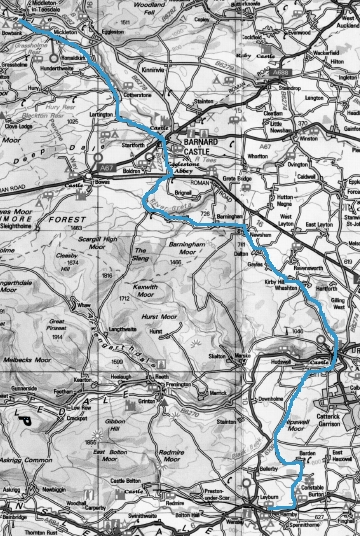
3 september 1995: Leyburgh – Middleton in Teesdale
Opnieuw geen gegevens over de afstand. Ik wiste de data uit mn computertje. De hele dag ‘pissing rain’ en koud. Even voorbij Barnard Castle brak ik een spaak. En aangekomen op de camping werd het droog en begon de zon te schijnen.
1995_09_03.jpg
4 september 1995: Middleton in Teesdale – Highfield/Derwent
Ik herinner me een lange, geleidelijk klim over The Pennines, vijf kilometer met tegenwind door de heidevelden. Geen mens te zien, tot, vlak voor het dorp, een local (te voet) een praatje aanknoopte. Werkloos, socialist. 60 jaar oud, maar zag er jonger uit. Hij zei: “The worst thing is that the Sovjet Union has fallen apart.” Daarom waren de conservatieven hun angst voor het werkvolk verloren. Met desastreuze gevolgen. In het dorp nam ik de ‘fjord’, vergat dat stenen in een beekje glad zijn en ging bijna onderuit. (Overal stonden huizen te koop, de dorpen liepen destijds leeg). De route ging door Consett, dat zo arm was dat het er rechtstreeks crimineel uitzag. Vond een prachtige camping aan de Derwent.
1995_09_04.jpg
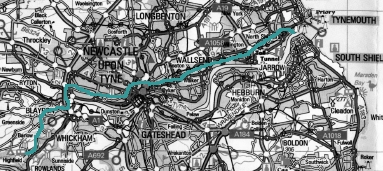
5 september 1995: Highfield – Newcastle
Laatste stukje. Niet meer dan Newcastle door, naar de haven om de boot te halen. Raakte, de richtingaanwijzers volgend op de snelweg terecht, vond geen andere weg en racete dus maar over de snelweg naar de haven. Heel vervelend maar eigenlijk ook wel kicken.
1995_09_05.jpg
Wat ik me herinner zijn ook prachtige landschappen, de zon over de bloeiende heide en de stille wegen door The Pennines.
(Hmm. Ik had de kaartjes wel iets groter mogen maken.)