Reading Matter, or to clean the desk

Like cleaning your desk: make a list of recently read books. (Including some that you’re currently reading, or will read in the near future).

It is cleaning the desk. Having made the list, I may put the books on the shelves, and this list will be the remainder/reminder.

William Gibson, Spook Country
I’d just embarked on reading Gibson’s latest when Omar sent me the warning: “this is Gibson’s worst book”. Well, it didn’t make a difference as having read everything by Gibson, I simply wanted to read this one too. Having finished it, I now wonder why I put in those hours of reading time. The novel never seems to start off. Gibson’s style is bland, and the words did not conjur up images. It is interesting to see that Gibson speculates on locative media, but the concepts he comes up with are not very imaginative (I have heard better ideas in workshops), and the connection he makes with the themes of privacy and surveillance are not very convincing. One is left with the ‘vintage-Gibson-plot’: here’s an elaborate plot ‘plotted’, which, a the end, turns out to be a cover up for something else. Almost everything is a mystery, as none of the characters has any idea about what is happening and why. Neither has the reader. And to be honest, I did not really care about it. Of course there are a few nice scenes and in the first few pages I did become interested in the character of the journalist. But it’s not enough. I’ll wait for the next one.

Jonathan Raban, Surveillance
Actually, I’m reading this one now and haven’t progressed further than page 84. It is a contemporary, conventional novel in the DeLillo-vein, half White Noise, half Mao II, updated for post-9/11. I read the first chapter immediately after finishing Spook Country and it became painfully clear how much Gibson’s novel was lacking in simply making the reader imagine a world through words. Surveillance may be a conventional novel, and you almost see how Raban positions his puppets, and how approaches the themes (security, surveillance), but he does it skilfully and it makes the novel an enjoyable read and an enticing analysis of contemporary western life.

Harm Nijboer, De fatsoenering van het bestaan
I did a little write-up for Harm’s PhD-thesis earlier. See below.

Franco Moretti, Graphs, Maps, Trees
I reviewed Moretti’s An Atlas of the European Novel years ago for Mediamatic, not really knowing who Moretti was (yeah, an Italian literary theorists, with a leftist background, I knew that). I enjoyed the use he made of maps and diagrams for the analysis of novels, and his style of mixing his own text with diagrams, maps and quotations. Graphs, Maps and Trees, subtitled Abstract Models for Literary History, takes all this one step further and proposes the use of graphs, maps and trees as methods for doing literary history. The book is short, convincing and very clear, and it makes one long for many more of the sort of studies that Moretti undertakes. It might be more sociology than hermeneutics, but I love this sort of sociology. The only aspect that I am a bit worried about is Moretti’s frequent referencing of biological models and evolutionary theory (Mayr, Stephen Jay Gould and D’Arcy Thompson are mentioned a few times). My worry mostly derives from the fact that it’s a bit too easy to suppose that form works exactly the same way in literature as it works in the biological realm. (That doubt being uttered here, I can immediately add that it does fit quite neatly. Yet I hope Moretti will not exchange all of his Marxian inclinations for evolutionary biology).

The Ends of the Earth, An Anthology of the Finest Writing on the Arctic/Antarctic
Two front sides: one for writing on the Arctic (ed. Elizabeth Kolbert), one for the Antarctic (ed. Francis Spufford). Spotted it in the nice bookshop in Rockport. Just a very nice collection of (literary) writing on the Poles. I sometimes read a chapter.

John J. Babson, History of the Town of Gloucester, Cape Ann, Including the Town of Rockport
This must be one of my craziest acquisitions: the 1972-reprint of Babson’s 1860 history of Gloucester, bought in Gloucester (where else?). I actually read about half of it until now. Naturally I bought it as an intertext for Olson’s Maximus Poems, that deal with the early settling of Gloucester, and Babson lists all the early inhabitants of Gloucester and relates their histories. Babson was the first to write the history of Gloucester, it was one of Olson’s favorites. Babson delved deep in the archives, and it seems there is not much he missed, except for the history of Cape Ann prior to 1623 (Samuel Camplain landed in Whale Cove in 1606, and many Basque and Portugese fishermen must have paid visits to Cape Ann between 1606 and 1623). It is fascinating reading – at least for someone who’s gotten interested in Gloucester through Olson. Local history, as the history of a place, how it is formed and formatted through various forces, has captured me.

Thomas Dresser, Dogtown, A Village Lost in Time
A booklet that is probably only for sale in and around Gloucester. It tells the story of Dogtown, the settlement near Gloucester that was abandoned during the 18th century – the last house was torn down in 1845. Now it is a wood – F. and me walked through it from Rockport to Gloucester – where the remains of the settlement are still visible. It’s strange place, that features in Olson’s Maximus Poems.

(And then there is the Babson Boulder Trail, a trail along boulders that have words carved into them, like an early 20th century idealistic/business/labour version of the Stages of the Cross: Ideas. Study. Be On Time. Courage. Intelligence. Use Your Head. Spiritual Power. Work.)

Good wikipedia-page about Dogtown with pictures: http://en.wikipedia.org/wiki/Dogtown,_Massachusetts.
Babson boulders: http://www.thedacrons.com/eric/dogtown/babson_boulders_gloucester.html.
More Dogtown: http://myweb.northshore.edu/users/ccarlsen/poetry/gloucester/dogtownhistory.html.
(Ah well, you can do the surfing and browsing from here…)

Jack Kerouac, On the Road, The Original Scroll
I started reading Kerouac when I was 17. Stopped when I was 20. So this is a return after many, many years. And a happy return it is: it is a joy to read, it is much better (and sadder) than I remembered, and it is not a (re)discovery of the autobiographic Kerouac, nor of the mythic Kerouac, but of Kerouac the writer. Excellent essays too. Still 30 pages to go.

Tom Clark, Charles Olson, The Allegory of a Poet’s Life
I guess this biography is necessary reading for whomever would like to understand Olson. It gives an excellent overview of his life, and a very good insight in his troublesome psyche. And what a mess he made of his life. I think I am interested in Olson also because he is too bookish, too abstract, too didactic. Clark mainly writes about Olson as a character, and much much less on his poetry, or his (equally messy) theories and poetics. That is fine, but it makes it the biography of the character, not of the poetry. Anyway, I still ‘devoured’ it.

en,reading matter,writing | October 15, 2007 | 17:15 | Comments Off on Reading Matter, or to clean the desk |

How important is it to visit a place

I went to Gloucester. I entered the public library. An excellent library – certainly if one takes into account how small Gloucester is. And there are shelves with all the books on Gloucester, and everything of Olson is there. And everything of Vincent Ferrini, the epic poem about Dogtown by Marsden Hartley, Babson’s guide to Cape Ann, and much more.

en,writing | October 15, 2007 | 17:10 | Comments Off on How important is it to visit a place |

Polis is This

There’s a 2007 documentary on Charles Olson in Gloucester that is currently being shown in the US. It’s made by Henry Ferrini, entitled Polis is This, Charles Olson and the Persistance of Place. It’s about Olson, Gloucester and the importance of poetry in everyday life. (I haven’t seen it, but it won a first prize in the 2007 Berkeley Video and Film Festival, and John Malkovich is the narrator). Trailer at the website: http://www.polisisthis.com/Polis/Home.html.

Insightfull review here: http://olsonnow.blogspot.com/2007/08/michael-boughnreview-of-polis-is-this.html

en,free publicity,writing | October 15, 2007 | 17:09 | Comments Off on Polis is This |

110.5 / 4.30

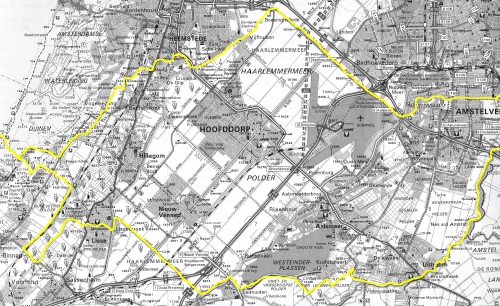
Zondag. 13.45 – 18.30. Alweer zo’n prachtige dag met gouden zonlicht, 19 graden en weinig wind. Ik was niet de enige die een ritje maakte: zelfs op zomerzondagen zijn de wegen zelden zo druk. Van Spaarndam tot en met Zandvoort kwam er geen einde aan het inhalen van andere fietsers (en wandelaars). Bij de Nieuwe Meer kwam ik Ebko en Mireille (en hun 2 kinderen) tegen. Bij Cruquius eindelijk eens de weg langs het Spaarne ‘uitgeprobeerd’.

Marcusstraat – Amstel – Beatrixpark – Oeverlanden – Badhoevedorp – Lijnden – Halfweg – Spaarndam – Santpoort – Kennemerduinen – Parnassia – Bloemendaal aan Zee – Zandvoort – Langevelderslag – De Zilk – Leiduin – Groenendaal – Cruquius – v.v. langs het Spaarne – Vijhuizen – Geniedijk – Hoofddorp – Geniedijk – Schiphol Rijk – Oude Meer – Amsterdamse Bos – Kalfjeslaan – Amstel – Marcusstraat


cycling,nl | October 15, 2007 | 14:28 | Comments Off on 110.5 / 4.30 |

97 / 3.52

Zaterdag. 13.30 – 17.30. Prachtig nazomerweer. Kortebroekenweer. Zon, weinig wind, 18 graden. Eigenlijk het mooiste fietsweer denkbaar.

Marcusstraat – Amstel – Ouderkerkerplas – Abcoude – Baambrugge – Loenersloot – Vreeland – Loenen – Breukelen – Tienhoven – Egelshoek – Lage Vuursche – Hoge Vuursche – St. Janskerkhof – Westerheide – Natuurbrug – Spanderswoud – Ankeveen – De Horn – ri. Muiderberg – Vecht – Muiden – Diemerpark – Ringdijk – Marcusstraat

cycling,nl | October 15, 2007 | 14:28 | Comments Off on 97 / 3.52 |

60 / 2.23

Vrijdag, einde van de middag. Prachtig nazomerweer. Zon, gouden licht, nauwelijks wind. Een zegen. Net voor donker een rondje Spanderswoud.

Marcusstraat – Ringdijk – Diemerpark – Muiden – Vecht – Naardermeer – Bussum – Hilversumse Meent – Spanderswoud – ‘s Graveland – Googpad – Weesp – kanaal – Diemerpark – Ringdijk – Marcusstraat

cycling,nl | October 15, 2007 | 14:27 | Comments Off on 60 / 2.23 |

De fatsoenering van het bestaan

On monday the 8th Harm Nijboer received a wel-deserved Ph.D. for his thesis De fatsoenering van het bestaan, Consumptie in Leeuwarden tijdens de Gouden Eeuw. It’s a very conscise and precise work, just over 120 pages (in Dutch), packed with knowledge. The core is a statistical analysis of probate inventories from the municipal archive of the Frisian city Leeuwarden. From that analysis he formulates critiques, hypotheses and some conclusions about the fashioning process in early modern times.

I read the whole thing on wednesday. Not knowing much about statistics, I cannot assess that part of the thesis, but apparently his methodology is quite radical and new. The chapters about consumption and the historiography of early modern consumption culture, and the chapter in which he theorizes the fashioning process are so thorough (and well written – there’s fun in there too and lots of Shakespeare!) that in the future I will certainly grab this book when I need info on this.

That said, it is a book with many links to interests of mine – like the culture of early modernity and Sentimentality, the time in which new forms of writing were emerging (for instance in The Spectator), and a new relation to publishing.

Plus, of course, the book has a theory which is relevant too for todays ‘bling-bling-culture’, and gives a good insight in the use of credit-papers in the seventeenth that is interesting in relation to todays ‘open money’ and barter-economies).

On a fun level: behind all this work lives the ghost of Lemmie, the bassplayer of Motorhead, Sentimentalism-pure.

Harm can be found here: http://home.planet.nl/~nijbo143/

blogging,en,free publicity,reading matter,research | October 12, 2007 | 14:21 | Comments Off on De fatsoenering van het bestaan |

Het Middel

While I was in Rockport, Dirk van Weelden’s new novel was published: Het Middel. In the two weeks before I helped him (with the help of Peet) setting up a wordpress-blog: http://www.dirkvanweelden.net.

Dirk has been interested in the possibilities that the internet and the computer offer for writing since the early days of good old-fashioned hypertext. He is also one of the most interesting writers of his generation. If you’re Dutch, you probably know this, but if you do not read Dutch, chances are big that you do not know him. I thought that a chapter from Mobile Home was translated in English, yet I cannot find it and I might be mistaken. In any case the essays he wrote for Mediamatic are available in English: search at http://www.mediamatic.net.

But if you read Dutch, his blog is one of the places to check out now.

blogging,en,free publicity,reading matter | October 12, 2007 | 13:38 | Comments Off on Het Middel |

As usual

As usual, dear reader, you’ll get an update after the fact. Blogging might be a form of writing that reflects the moment, a more or less immediate report of what happens now/today and is relevant right now, but in my case (and certainly not only in my case), subjects and ideas for blogposts accumulate in the mind, until, after days, I see a change and feel like writing them down. Which is now.

blogging,en | October 12, 2007 | 13:20 | Comments Off on As usual |

105 / 4.10

Nog een zonnige, nazomerse oktoberdag. Nog een kortebroekendag, 17 graden of warmer, weinig wind, onbewolkt. Rondje Langeveldseslag, maar bij Lisse rij ik verkeerd en daarna neem ik nog eens niet de optimale route waardoor ik te veel kilometers op de teller zet en steeds het gevoel heb stevig door te moeten rijden om voor donker terug te zijn. Dwars door de Haarlemmermeerpolder gaat tegen 38 a 40 tegen het uur: in het wiel van een jongen die op Sloten rijdt. Ik kan niet overnemen, maar na een stoplicht knoop ik een praatje met hem aan. “Kan merken dat ik niet meer train, ik kan je wiel houden, maar meer ook niet.” “Rij je niet op Sloten dan?” Blijkbaar zie ik er nog steeds uit als zou ik iedere zaterdag op Sloten rijden. Hij zegt: “Fietsen is zo mooi. Al die materieële dingen, daar geef ik niet om.” Ik kan niet anders dan beamen.

Marcusstraat – Ouderkerk – Uithoorn – Kudelstaart – Westeinder Plassen – Leimuiden – Lisserweg – Lisserbroek – Lisse – ri. Voorhout – Leidse Vaart – Langeveldseslag – De Zilk – Leiduin – Cruquius – Vijfhuizen – Boesingheliede – Amsterdamse Bos – Kalfjeslaan – Marcusstraat

cycling,nl | October 12, 2007 | 13:09 | Comments Off on 105 / 4.10 |
« Previous Page — Next Page »
This work is licensed under a Creative Commons Attribution-NonCommercial-ShareAlike 2.5 License. | Arie Altena