Critical Inquiry on note taking & XML

Copied two articles from Critical Inquiry 31, (Autumn 2004) on the art of transmission & read those this afternoon:

Ann Blair, ‘Note Taking as an Art of Transmission’ (p. 85-107)
Alan Liu, ‘Transendental Data: Toward a Cultural History and Aesthetics of the New Encoded Discourse’ (p. 49-84)

Ann Blair writes: “This historical interest [in note taking] is fueled not only by the rapid growth of the history of reading, of which the study of note taking is an offshoot, bit also by our current experience with new technologies and our sense (often more diffuse than articulate) that the computer is changing both the way we take notes and the kind of notes and writing we produce.” (p. 89)

Let’s make that ‘sense’ more articulate…

Apart from that, I think that my interest in note taking also derives from the fact that I have never been able to devise a working systems of note taking for myself, but keep on dreaming about it. Notes are in my notebook, on post-its stuck on the pages of books, in the margin on photocopied articles, in text-files on the computer (both in VoodooPad, TextEdit, BBEdit, MacJournal and — very rarely — a wiki), entries on my blog, and sometimes even sheets of A4-paper. I dream of having a database of quotations (like a commonplace book), a full bibliography with annotations, also covering websites. It seems so easy…

blogging,en,research,ubiscribe,writing | August 2, 2006 | 15:32 | Comments Off on Critical Inquiry on note taking & XML |

More browsing

More browsing: from Jeroen Mettes on Romanticism, http://n30.nl/2006/08/schetsmatig-pleidooi-voor-de-romantiek.html, to the piece by Benjamin Kunkel on writing and memoir, http://www.nytimes.com/2006/07/16/books/review/16kunkel.html”, to the n+1 magazine, http://www.nplusonemag.com/, in which a.o. I find this text that voices my opinion on Eggers & The Believer: http://www.nplusonemag.com/situation_2.html — regressive avant-garde.

en,reading matter | August 2, 2006 | 15:13 | Comments Off on More browsing |

OMG, Jeffrey Deitch discovers The Boredoms

As I mentioned Braxton playing with a noise-punk band, yesterday, I guess I’m allowed to mention today that The New Yorker features an article on Yamataka Eye and The Boredoms, from which I learn that Jeffrey Deitch has discovered them too, and will host a Boredoms installation in his gallery next year: http://www.newyorker.com/critics/music/articles/060807crmu_music.

(Yes, I’m wasting my time, browsing & blogging).

(Good friends of mine have followed The Boredoms since 1987. I saw them twice in the early nineties. An audience of what, twenty? thirty? forty? made them play three encores. We had beer with them backstage. “Those were the days”.)

Ha, in twenty years time Jeffrey Deitch will host an Oorbeek-installation!

en,music,Uncategorized | August 2, 2006 | 11:20 | comments (1) |

Dewey on public & private

Just a sentence I read upon opening Dewey’s The Public and its Problems from 1927: “In general behavior in intellectual matters has moved from the public to the private realm.” (p. 50). Would that hold in times of ubi-blogging? Not if blogging is taken as publishing (which I think it should). Could you now write “In general behavior in intellectual matters has moved from the private to the public realm”? Not yet, I’d say. Though for some it would be true.

blogging,en,ubiscribe | August 1, 2006 | 15:59 | Comments Off on Dewey on public & private |

Braxtoniana

Anthony Braxton plus, uh, relentless noise-punk? I’d missed that: http://www.boomkat.com/item.cfm?id=22814 and http://www.wordthecat.com/goku/2006/07/28/wolf-eyes-and-anthony-braxton/.

en,music | August 1, 2006 | 15:12 | Comments Off on Braxtoniana |

65 / 2.56

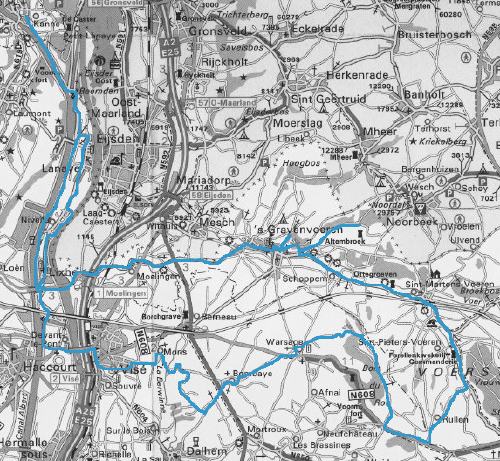
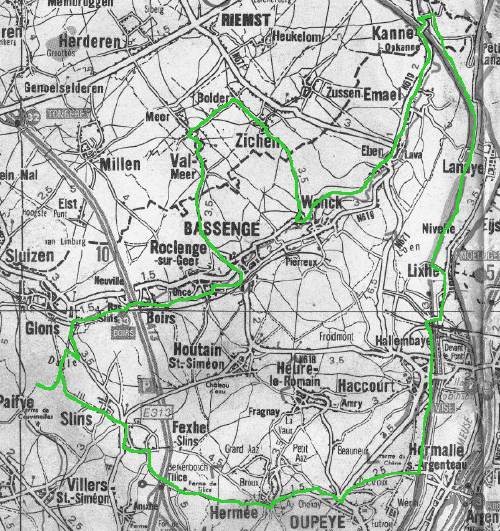
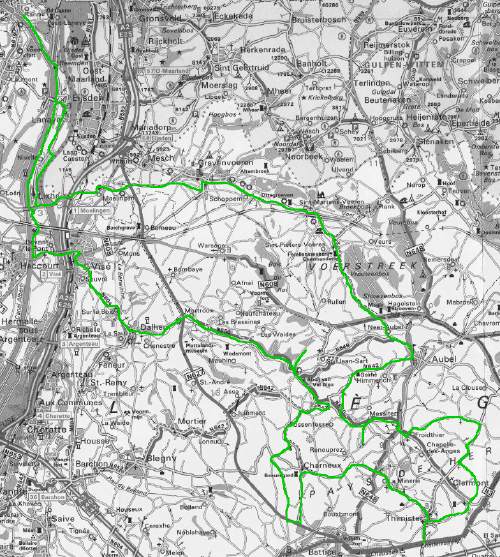
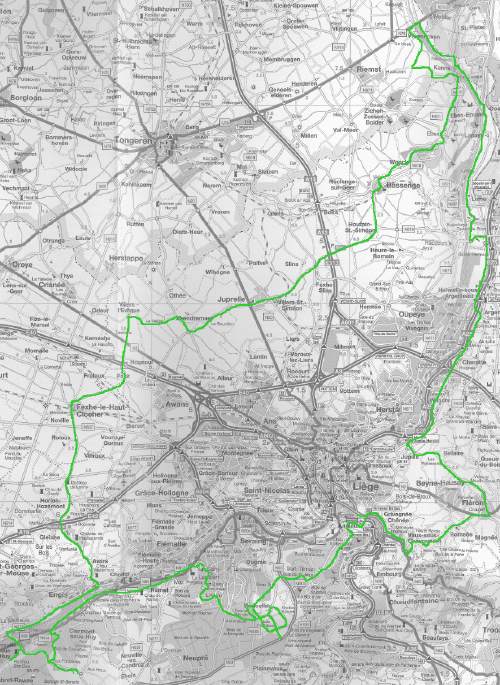
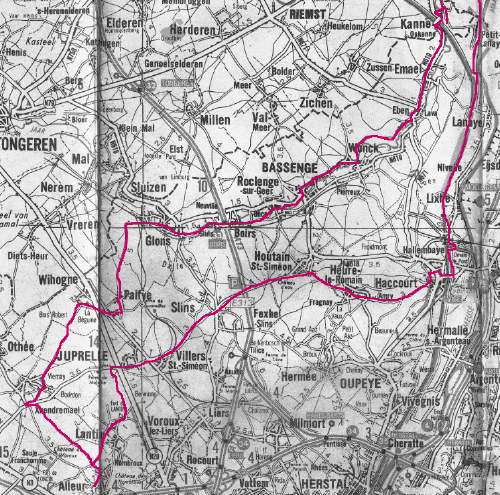
Zelden zulke slechte benen gehad. Ik kwam niet vooruit. Allerlei spieren deden pijn — een late reactie op de spanning van gisteren? Toch nog bijna drie uur gereden, van kwart voor vijf tot kwart voor acht. Prachtig weer, meest zonnig, beetje wolken en drie sputters van een bui waar ik onderdoor fietste. Warmer dan verwacht, nog een graad of 25. Kanne – Eben – Wonck – Bassenge – Roclenge – Boirs – Glons – [mooie smalle klim, waar de route met de roze pijlen naar beneden komt] – Slins – Anixhe – Hermee – Oupeye – Hermalle ss Argenteau – Wixhou – St. Remy – Blegny – Trembleur – Dalhem – Bombaye – Berneau – Moelingen – Lixhe – Lanaye – Kanne

cycling,nl | August 1, 2006 | 10:36 | Comments Off on 65 / 2.56 |

Been there, done that

That’s what it feels like, a bit: been there, done that. So now I can say: I have performed at the BIMHUIS, with Oorbeek and Koichi Makigami (what a sweet person he is, and what a performer!) I was nervous, I stayed in the dressing room for 2 hours, rehearsing.

Then, on stage, everything was fine & went fine. Heard quite a few good reactions, both from people who’ve seen us a few times (and probably would not hesistate to tell us if it was terrible), and from people who saw us for the first time. Sold a few cd’s. The audience was mainly a sunday afternoon crowd — it was the jew’s harp festival & I don’t think all of them enjoyed our way of making music. The chaos of it, the noisy bits, the changes from soft to loud to soft, the piecing together (or coming together) of various fragments. But it was pretty packed — and that felt, well, good of course.

It felt strange as well: in the past I’ve seen so many concerts of improvised music & free jazz — in the old BIMHUIS — by groups far better than us, for an audience of like 20. I don’t know what that means… I guess it means that this festival was marketing success. (The jew’s harp festival received al lot of publicity). So I wonder how many in the audience did think — let’s go for a nice sunday afternoon concert, and then thought, oh my god, what a terrible noise!

But it was a great joy to play with Koichi Makigami. And he, of course, was the star.

en,music,Uncategorized | August 1, 2006 | 10:35 | Comments Off on Been there, done that |

Het Einde, Jeroen Theunissen

De boodschap die Jeroen Theunissen — okee, de verteller van diens roman Het Einde — ons aan het slot meegeeft: (in parafrase): blijf nee zeggen, blijf je verzetten, dat is wat de mens tot mens maakt. Ga door. Blijf geloven in een ander happy end dan die ons worden beloofd. Het staat er zo bijna plompverloren in een boek dat ook verder de grote thema’s (rampen, klimaatverandering) niet schuwt en intelligent inhaakt op het huidige theoretische discours, dat ik toch moest denken aan het einde van Beckett’s Unnamable. (Is dat logisch?) Het Einde gaat over het einde van een liefde (vriendin verlaat hoofdpersoon), het einde van een leven (dromen van upload in cyberspace), en het einde van een tijdperk (global warming). En dan dus het slothoofdstuk met bovenstaande strekking.

Dit is serieuze literatuur, die serieus genomen wil (en moet) worden. (Al valt er te lachen). Ik heb genoten van dit boek — het is fijn om een roman te lezen die zo nadrukkelijk inhaakt op het heden en hedendaagse problematiek, waarin dromen van het uploaden van een bewustzijn, het andersglobalisme, de ideeën van Kurzweil en uit de ecologie, vanzelfsprekend voorbijkomen. Het bevalt me stukken beter dan het meeste van de huidige romanproductie (en zeker beter dan het geschrijf van Peter Verhelst — aan wiens laatste roman Theunissen een beschouwing wijdt in de Yang). En toch weet ik het niet. Ik ben niet volledig overtuigd. Om uit te vinden wat er aan scheelt zal ik het boek moeten herlezen (en dat boek ligt in Kanne, terwijl ik nu in Amsterdam ben). Het valt niet logisch op z’n plek mijn — niet ge-expliciteerde — idee over wat een goeie roman is. Te karig? Toch te gestoffeerd? Een te makkelijke verwerking van ‘hippe’ theorie — Kurzweil, Lovejoy?

PS & BTW: wat is dat toch met die mode van de hardbacks? Ik heb echt liever een ingenaaide paperback dan een geplakte hardback.

nl,reading matter | July 29, 2006 | 13:55 | Comments Off on Het Einde, Jeroen Theunissen |

Culturele dieptepunten…

In de categorie “het moet allemaal niet al te moeilijk zijn, hoor, want dat is niet leuk” laat Neerlands dichter Ingmar Heytze — okee, niet het grootste intellectuele licht van de lage landen — hedenochtend in Volkskrant optekenen dat ie niet door Yann Martel’s Life of Pi (euh, in de vertaling uiteraard) is heengekomen, geen zin heeft in de Safran Foers, maar wel de Harry Potter’s en Dan Browns in een ruk uitleest. Wat een treurigheid. Nu heb ik niks tegen ontspanning (ik lees zelf zo goed als alle boeken over wielrennen), maar als zelfs een dichter ons niet eens meer komt vertellen dat er iets te winnen valt (namelijk: genietingen! verdomme!) door het lezen van, nou, voor mijn part Joyce, Beckett, Foer, — weetikveel — in plaats van Dan Brown en de Pottersen, waar blijf je dan? Zo’n dichter neemt zichzelf en zijn beroep niet serieus. (In evenmin zijn positie als hij door de krant wordt geinterviewd). Punt. En trouwens, tevens symptomatisch voor de VK zo’n stukkie.

Pff. Waar maak ik me druk over? Wat is er tegen een krant met de diepgang van de Libelle of de Nieuwe Revue?

nl,Uncategorized | July 27, 2006 | 15:39 | Comments (13) |

Locke, commonplaces and methods of retrieving knowledge

(Damn, just lost a long post because Safari crashed… Here I go again).

I read John Locke’s A New Method of a Common-Place-Book a few days ago. (E-text here: http://oll.libertyfund.org/Home3/Book.php?recordID=0326). I was quite excited to find out it only deals with his method of indexing and retrieving previously ‘stored’ notes; his ways to deal with paper-techniques to extends one’s own memory.

Actually Locke’s method shows that his commonplace books were no commonplace books anymore, but notebooks. Commonplace books belong to the Rennaissance, and to a world in which rhetorics are predominant. Notebooks belong to the new world of modern science. One deals with constructing arguments the other with arriving at scientific truth. One still puts (human) memory in the centre; the other values reporting and writing down. (To put it bluntly). What I find exciting is to see the co-development of storage & publishing techniques (paper not really being scarce anymore in Locke’s time) and techniques of writing, noticing and researching.

Interesting in this respect are the theories of Richard Lanham about economies of attention and the return of rhetorics in the world of the electronic word (as his book, froom 1993 (!) is called): http://www.rhetoricainc.com/.

A long an thorough paper on Locke’s methods of commonplacing is Richard Yeo’s John Locke’s New Metod of Commonplacing, (2004): http://www.phil.mq.edu.au/staff/jsutton/Yeo.doc. Here’s my digest in quotes.

(All this I find interesting because of the (for me) implied reference to blogging: making notes, research, indexing, use of keywords, referencing, working/writing/publishing methods — and the relation to rhetorics & the use of commonplaces — read: samples).

“I argue that on his own account, Locke extends and complicates the previous functions of these notebooks, making them part of a system for managing information that could be adapted to suit individual purposes.”

“In his influential De Copia (1512), Erasmus offered a manual of examples, advising that themes, quotations and maxims from classical texts be entered under various loci (places) to assist free-flowing oratory.”

“By 1704, the year of Locke’s death, Jonathan Swift (who kept his own commonplace book) regarded the worst applications of the method as part of a syndrome of techniques—including abridging, epitomizing, and indexing—all offering easy ways to skim a book. He dubbed this syndrome “Index learning.” Such abuse of commonplacing was disastrous: “By these Methods, in a few Weeks, there starts up many a Writer, capable of managing the profoundest and most universal Subjects. For, what tho’ his Head be empty, provided his Common-place-Book be full.” The reputation of this humanist legacy had further to fall: by the nineteenth century the term “commonplace” degenerated to refer to ordinary, unremarkable facts or observations—the very opposite of its early modern meaning.”

“yet Cicero stressed that the good orator needed knowledge, not just rhetorical skill: “A knowledge of a vast number of things is necessary, without which volubility of words is empty and ridiculous … the whole of antiquity and a multitude of examples is to be kept in the memory.” This is why the natural powers of memory needed to be augmented, a demand inflated by the humanist passion for “copious” embellishment of material.”

“Bacon affirmed the role of a “good and learned Digest of Common Places”: “The great help to the memory is writing; and it must be taken as a rule that memory without this aid is unequal to matters of much length and accuracy.””

“Between 1500 and 1700 there was a subtle shift in the function of such notebooks: from being repositories of the material that individuals sought to memorize, they came to be seen as ways of retaining information that could never be memorized”

“Thus although material is placed under an appropriate category, or subject, its position in the notebook is determined by alphabetical combinations. Such compression and scattering of related material is tolerable because the index operates as a finding device⎯provided that the maker of the commonplace book remembers the Head under which particular material has been placed.” (Concerning Locke’s notebooks).

“This “topical man,” as Locke pointedly calls him, has a memory full of “borrowed and collected arguments” but usually mixes incompatible elements because he has not thought these ideas through. This stance anticipates several passages in Some Thoughts where Locke ridicules the collection and memorizing of quotations, “which when a Man’s Head is stuffed “with, he has got the Furniture of a Pedant.””

“Locke rarely made marginal notes in his books. Instead, on the inside back cover he noted the pages containing something that he entered in one of his commonplace books. When picking up this book on a subsequent occasion, he then knew that there was already a commonplace book entry.”

“In these ways, Locke’s adversaria and his library catalogue were linked, and so the commonplace method was now part of a sophisticated system for research and information management.”

” For Locke, however, commonplace books are not catalysts for related, yet memorized, material; instead, they are a means of reducing dependence on memory, retrieving references, and avoiding unnecessary duplication in note taking. His method allowed one to forget, thus relieving the memory, and yet also providing a means of finding required material at a later time.”

“Locke used commonplace books in new ways, expanding their scope and transforming them from a rhetorical storehouse into a research tool and a crucial component of his system for managing information.”

” Traditionally, commonplace books contained personal collections of publicly accepted knowledge. The material they stored, usually drawn from the classical corpus, comprised generally accepted tropes, maxims, and quotations that could be applied in oratory and written compositions. Such commonplace material was effective because its status was unchallenged and its authority could, with appropriate skill, be transferred to the particular case being argued.”

“Thus although such commonplaces were collected by individuals in unpublished notebooks, they were intended for public use and relied on widely endorsed values. Indeed, it was assumed that these notebooks could be shared and read with benefit by other educated individuals.” (This is an interesting relation with blogs I’d say…)

“Nevertheless, his [Locke’s] method of indexing does suit a world (described in Le Clerc’s introduction of 1706) in which the ambit of reading and study is expansive, and future topics not easily anticipated. Confessing his own habits, Locke acknowledged a tendency to “change often the subject I have been studying, read books by patches and as they have accidentally come in my way, and observe no obvious method or order in my studies.” Given such a pattern, we can see why he confronted the problem of allocating pages in a notebook.”

“I think that Locke’s account of memory shows why commonplace books are necessary for the proper ordering and retention of ideas; his concerns about disorderly and confused ideas entail the need for methodical collection; and his views on personal identity suggest a role for commonplace books in reinforcing a biographical sense of self.”

“Locke did not see the practice of making entries in commonplace books as a way of improving memory. ”

“In 1704 Locke’s French translator, Pierre Coste, reported that the great philosopher advised that “whenever we have meditated any thing new, we should throw it as soon as possible upon paper, in order to be the better able to judge of it by seeing it altogether; because the mind of man is not capable of retaining clearly a long chain of consequences, and of seeing, without confusion, the relation of a great number of different ideas.””

“The commonplace books gave Locke dedicated pathways to his library and saved time in finding passages previously read and noted. The emphasis was on retrieving, rather than recalling, information, but the indexing still required the user to remember the Heads that were chosen when particular entries were made.”

“The stress was not on quotations under generally shared Heads, but rather on referencing entries back to books, ideally those in a personal library.”

All quotes from Richard Yeo, ‘Locke’s New Method of Commonplacing: Managing Memory and Information’, in Eightteenth Century Thought, 2, (2004) 1-38.

en,quotations,ubiscribe,writing | July 27, 2006 | 15:08 | Comments Off on Locke, commonplaces and methods of retrieving knowledge |
« Previous PageNext Page »
This work is licensed under a Creative Commons Attribution-NonCommercial-ShareAlike 2.5 License. | Arie Altena