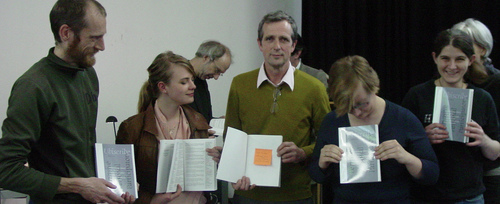
Hier zijn ook de tijdschriften gearriveerd, net als bij De Contrabas (http://decontrabas.typepad.com/de_contrabas/2006/05/tijdschriftenwe.html). D.w.z. ik kocht ze bij Atheneum, gisteren: de Yang — nog altijd verreweg mijn favoriet, en ook de Parmentier. En jawel Chretien, ditmaal is de Yang een stuk minder academisch dan de Parmentier.
Vanochtend/vanmiddag (trein Amsterdam – Maastricht) een groot deel van het dossier ‘elektronische literatuur’ van de Parmentier doorgenomen. Mijn stukje voor de nieuwsbrief van het Fonds voor de Letteren is af en vrijdag ‘op de e-mail’ gegaan, daarover dus geen zorgen. Ik kan nu niets meer veranderen. En blij om te merken dat er in de Parmentier niets ‘schokkends’ staat, niets dat ik had gemist en had moeten weten. Niets nieuws. (Blijkbaar is t dus nog meer ‘mijn’ onderwerp dan ik dacht…)
Ik heb wel kritiek ;-) Ten eerste vind ik het jammer dat de ‘elektronische literatuur’, toch weer, teveel wordt opgehangen aan het issue van mediumspecificiteit (ja, ondanks het feit dat juist dat aspect onder vuur wordt genomen). Jammer ook dat het dossier nogal hangt op artikelen waarin wordt geprobeerd de ‘elektronische literatuur’ te definiëren. Dan kom je dus uit bij een smal genre ‘elektronische literatuur’, terwijl de hele verschuiving of transformatie van de cultuur en de literatuur onder invloed van digitalisering + netwerken, veel fascinerender en belangwekkender is.
Neem het openingsessay van — uiteraard (en terecht) — Jan Baetens. Niets ten nadele van Baetens, ik heb veel van z’n artikelen gelezen, en hij is absoluut DE kenner. Bovendien is hij ook uitstekend op de hoogte van het hele nieuwe media-discours (zeg Manovich, Hayles en al die MIT-boeken) en dat is noodzakelijk. Baetens signaleert kwesties die interessant zijn en die een precieze ontrafeling waard zijn, maar ga je daarop in, verzeil je in een (ongetwijfeld razend leuke) academische discussie die zich nogal snel loszing (kweet, een woord dat ik te vaak gebruik) van de artistieke praktijk. Ik vind zijn artikel te academisch.
(Ja, het is een academisch paper, en ja, damn, ik moet zelf deze week zo’n paper schrijven — hum).
Ik vind het jammer dat Baetens er vooral een definitiekwestie van maakt. Ik vind het jammer dat hij het weer teveel ophangt aan de hypertekst, de geanimeerde poëzie en wat daaruit voortkomt. (Er & het = de e-lit). Ik merk dan dat ik zo’n stuk heel snel ga lezen, I sort of know what it’ll be about. En dat is jammer (zoveel woorden…). Ik ken de discussies, ik weet al wat ik ervan kan gebruiken en wat niet en waar ik tijd aan wil besteden en waaraan niet. Ik signaleer de nieuwe wegen die de discussie inslaat en that’s it.
Even opscheppen. Anno 1996 — of was het 1995? — gaven Eric Vos (later met Baetens samensteller van het DWB-nummer over elektronische literatuur, meermaals aangehaald in deze Parmentier) en uw blogger aan de UvA een college over elektronische literatuur. Onder de deelnemers o.a. Ward Wijdelts en Gijsbert Kramer en, als ik me niet vergis, Teike Asselberghs. Tis dus niet dat t met allemaal te moeilijk is ofzo.
Ik ben enerzijds te geïnteresseerd in de ‘traditionele poëzie’ (ik ren wel naar de boekhandel om de nieuwe Van Bastelaere te halen, zoals ik ook zal doen als Jeroen Mettes een bundel uitbrengt), anderszijds in een veel breder perspectief van culturele transformatie. Voor een micro-analyse van Eric Sadins Tokyo heb ik dan niet het geduld.
Liever lees ik dan Islamitische meisjes van Jeroen Mettes vier keer. “God heeft alle Islamitische meisjes op MSN”.
Dan is er het stuk van Philippe Bootz. Tja, om Bootz kun ook niet heen. Daarin onder andere een uitstekend overzicht van de ontwikkeling van computerliteratuur, van de permutaties van Lutz en Gysin, via tekstgeneratie (Bense en Moles worden genoemd), naar — eerste culminatiepunt — Les Immateriaux, (1985, tentoonstelling verzorgd door Lyotard). OULIPO en LAIRE komen voorbij, en tja, het is allemaal nogal Frans getint, met een heel klein beetje Amerika. Allemaal bekende voorbeelden uit de Bootz-hoek, de avant-gardehoek. Wie slechtgezind is, ziet een te doorzichtige poging tot canonvorming, of promoten van de eigen avantgarde.
Wat ik totaal mis in de stukken van Bootz en Bouchardon is het bredere perspectief. Bij Bootz slik ik dat nog, maar dat Bouchardon, die het nota bene exclusief heeft over het interactieve verhaal geen enkele maal refereert aan de huidige computer/rollenspellen als Everquest of World of Warcraft of een van de vele andere uiterst succesvolle ‘implementaties’ van interactieve narrativiteit voor het grote publiek, is tekenend voor zijn enge, misschien zelfs benauwde perspectief. Natuurlijk (?) is World of Warcraft geen literatuur, maar door zulke referenties niet te maken scheppen Bouchardon, Booth en zelfs Baetens een beetje, de indruk dat ‘elektronische literatuur’ zich aftekent tegenover (zelfs afzet tegen) de papieren literatuur. Terwijl ze wordt gemaakt en geschreven in een levendige on- en offline wereld.
Ik werd zelfs een beetje boos. (Zie volgende paragraaf).
Bouchardon eindigt zijn stuk met de zin “Men kan zich afvragen in welke zin computerliteratuur niet in de eerste plaats theoretische literatuur is over de literaire activiteit, een kritiek die nadenkt over literaire handelingen”. Kijk, ik hou van de meest extreme vormen van literatuur, maar een dergelijke zin kan alleen getikt worden in een — laat ik eens een cultureel vooroordeel bezigen — ‘Frans kunstklimaat’, waar er blijkbaar mensen zijn die hartstochtelijk geloven in hun eigen theoretisch goed dichtgemetselde mini-avantgarde-van-ouderwetse-snit. Zucht. Natuurlijk is er zulke “theoretische” literatuur — en goed mogelijk dat ik zulke literatuur zelfs razend spannend vind; maar het is nooit alleen dat, en bovendien is het, zolang het zich verre houdt van wat mensen daadwerkelijk met tekst en al klikkend en surfend on- en offline doen, een nogal marginaal interessante, tja, ik vrees academische kwestie. Ik vrees dat deze avant-garde niet ‘supra’ is (om de term van Samuel Vriezen te lenen).
Ik vind dat des te irritanter omdat Bouchardon verder een hartstikke bruikbaar en heldere analyse geeft van de verschillende aspecten van (literaire) interactieve teksten.
Veel blijer word ik dan van het stukje van Hans Kloos. Daar vind ik de connectie tussen theorie en praktijk, de vertaling van theorie naar praktijk, en andersom. (In plaats van het poneren van theoretische hypotheses).
En gelukkig is er dan Wormgoor van Han van der Vegt — de Orfeo et Euridice – mythe, in de vorm van een walkthrough. Zo’n gedicht drukt veel directer uit wat er met taal gebeurt in het tijdperk van de computergame. Het is dan wel geen elektronische literatuur, maar het is een veel beter voorbeeld van hoe poëzie verandert (en: dat ze springlevend is).
Tenslotte is er nog Niels Bakker. Die noemt tenminste wel GoogleBooks, en het normaal worden van lezen van scherm, en hij suggereert voorzichtig — op autoriteit van Barend van Heusden, terwijl hij, jaargang 1981, voor zichzelf zou moeten spreken — dat papier voor jongste generaties de dynamiek mist die de elektronische tekst wel bezit.
(Euh: ik heb een paar keer lesgegeven aan zo 18 a 22-jarigen, op een HBO, enne, dat is natuurlijk geen representatieve steekproef, bovendien deden ze iets met ICT, maar euh, boeken, zo had ik de indruk, bestonden feitelijk niet voor hen — en als wel, dan als pdf van een torrent getrokken, om t eens overdreven te stellen. Van die torrent kwamen ook hun teveeprogramma’s, de live voetbal uitgezonderd. Wel, ik dwaal af.)
Goed, Niels Bakker slaat een keer de plank per ongeluk mis als hij stelt “Maar zijn die tijdelijkheid en veranderlijkheid specifiek voor de computer? Nee, integendeel zelfs. Film en televisie bieden precies dezelfde mogelijkheden (…).” Eventjes vergeten wat programmeren is. Er wordt een programma uitgevoerd, de output daarvan is iedere keer anders (afhandelijk van whatever parameters): dat is de veranderlijkheid van de elektronische tekst. Niet alleen het filmische.
Oh ja, Lucas Hüsgen en Josien Laurier zijn ook nog onderdeel van het dosssier, en er zit een cd-rom bij maar die heb ik nog niet gezien.
Lang stuk. Publish? Ja, publish.