and because I use the 12” powerbook my writing tools become too hot to use as well. It’s really annoying to write on a laptop that’s burning hot under your hands when outside it’s 34 degrees.
So I stick with books mainly as long as this wheather continues.
Too hot to go for a ride on the bike.
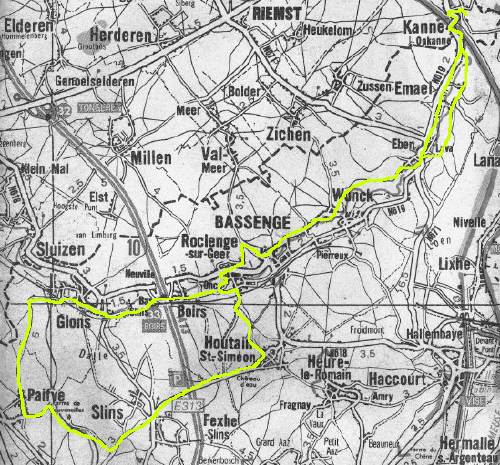
Zaterdagmiddag. Erg warm en superzomerse felle zon. Prachtig door de korenvelden. Later in de middag F & N ophalen van het station voor een weekendje wandelen. Kanne – Eben – Moulin du Broukay – Bassenge – klim – Roclenge – Houtain St. Simeon – Slins – Paifve – Glons – Roclenge – Bassenge – Eben – Kanne
Bruno Latour (ed.) Making Things Public, the how-many-kilo’s-heavy-catalogue of last years ZKM-exhibition; to trace / research the connection between public and publishing, politics and private life, speaking (writing) in public, speaking (writing) for oneself, gathering an issue, forming a public — &c. I’ve read bits of it earlier (especially Noortje Marres’ paper on Dewey and Lippmann), but now I’m reading, well… browsing the whole book.
(Related to Flusser on publishing & thoughts on blogging).
http://makingthingspublic.zkm.de/ & http://mitpress.mit.edu/catalog/item/default.asp?ttype=2&tid=10595.
Jeroen Theunissen, Het Einde, latest novel of this younger Flemish writer. Review: http://extra.volkskrant.nl/select/boeken/artikel.php?id=60.
Plus: the deuterocanonical books from the Bible. Why? Just curious. I don’t know them.
Warm, erg warm zomerweer, maar met een frisse noordoostenwind en de koelte op hoogte toch goed om te fietsen. Gisteren een rondje Rurberg, vandaag een tochtje naar Stavelot om de Stockeu te doen. Omdat ik besloot via Malmedy terug te rijden (oei, wat een rotweg) ook nog vanuit Beverce de weg naar de Ferme Libert gereden (een andere top 10 uit de Cotacol). Hier en daar wat extra gereden omdat ik een weg zocht (zoals voorbij Theux), die ik niet vond, of die niet bestond. (Het is toch opvallend hoe verschillend de drie, vier kaarten zijn zo gauw het gaat om de lokale kleine wegen). Kanne – kanaal – Vise – Lorette – Dalhem – Chenestre – Mortier – route cirulation locale – Herve – ri. Soumagne – ri. Petit Rechain – ri. Xhendelesse – Soiron – Pepinster – Theux – Winamplanche – Creppe – Geronstere – La Gleize – Coo – Stavelot – Stockeu – Stavelot – Malmedy – Beverce – Ferme Libert v.v. – Hautes Fagnes – Mont Rigi – Limbourg – Clermont – Froidthier – Val Dieu – Mortroux – Warsage – Gravensvoeren – Moelingen – Lixhe – Lanaye – Kanne
Prachtig zomerweer, zon, warm en wat wolken — in het bos aanmerkelijk koeler dan elders. Rondje Rurberg (en weer een lekke band). De hele dag op de fiets en veel wegen die ik niet kende. Het stuwmeer bij Rurberg is prachtig, de afdaling ernaartoe ook, de klim vervolgens ook wel, maar verder is dat deel toch wat minder mooi dan de Hautes Fagnes. (Of ik heb niet de mooiste weggetjes weten te vinden?). Kanne – Lanaye – Moelingen – Gravensvoeren – St. Martensvoeren – Veurs – Remersdaal – Hombourg – Montzen – Lontzen – Walhorn – Raeren – Roetgen – Simmerath – Kesternich – Rurberg (naar het meer gereden en een stukje erlangs) – Woffelsbach – Steckenborn – Strauch – Rollesbroich -Lammersdorf – ri. Mülartzhütte – Rott – Schmitthof – Sief – Lichtenbusch – dwars door het bos onder Aken – Drielandenpunt – Gemmenich – Sippenaeken – Teuven – Slenaken – Schilberg – Ulvend – St. Martensvoeren – Gravensvoeren – Moelingen – Lixhe – Lanaye – Kanne
In the Guardian of last saturday I read an edited excerpt from Frances Wheen’s forthcoming book on Marx’ Das Kapital (in a series that is called ‘Books that Shook the World’). It’s also online: http://books.guardian.co.uk/review/story/0,,1814909,00.html.
“By the time he wrote Das Kapital, he was pushing out beyond conventional prose into radical literary collage – juxtaposing voices and quotations from mythology and literature, from factory inspectors’ reports and fairy tales, in the manner of Ezra Pound’s Cantos or Eliot’s The Waste Land.”
Not only did it inspire me to go out and try to buy the book immediately (but it’s not available yet…), it paints such a alluring picture of the book and the style it is written in, that I’m tempted to make Marx’ big book my summer reading…
But then, should I read it in German (all the editions look equally ugly), or pick up the Penguin Classics edition that probably most people are reading nowadays and that, I guess, Wheen cites from…
(Frances Wheen also wrote a very enjoyable biography of Marx.)
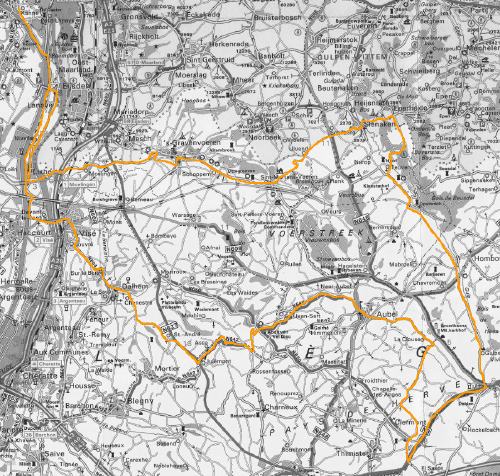
Wat een zomer, eigenlijk te warm om te rijden, maar het is al half vijf voor ik wegrijd. 500 kilometer in 4 dagen. Felle zon, een klein beetje wind, 28 graden, en als de zon zakt fantastisch zomerweer. 16.30 – 19.15. Van Dalhem tot Clermont volg ik de blauwe achtjes — een route die, als ik me niet vergis vanuit Bilzen vertrekt, keerpunt 80 km bij Dalhem, keerpunt 100 bij Aubel — een goeie keuze. Ik rij wel langzaam; ik denk dat de klimmetjes me lui maken, ik rij altijd lekker rustig omhoog, daal vervolgens op mn gemak, en tja, als het dan vlak ik peddel ik ontspannen voort. Gisteren keek ik toen de teller op 4.30 rijtijd stond eens hoeveel kilometers erop zaten, verwachtte een getal boven de 100 en zag tot mijn schrik het getal 86 (of was het 82?) verschijnen. Gemiddelde 19.6. Huh? Toen zette ik er toch maar wat meer vaart in. Kanne – kanaal – Vise – Dalhem – Chenestre – St. Andre – Julemont – Val Dieu – Aubel – La Clouse – (daar was ik nog niet eerder) – Crawhez – Clermont – Henri-Chapelle – Hombourg – Teuven – Gieveld – Slenaken – Schilberg – Ulvend – St, Martensvoeren – Gravensvoeren – Moelingen – Lixhe – Lanaye – Kanne
Opnieuw heerlijk weer. 12.00 – 20.00. Warm, 28 graden, zon en wolken en bovenop de Hautes Fagnes koel, bewolkt en wat regenbuitjes. Fijn gereden, genieten, door het Hertogenwoud was het meer wandelen — zelfs als het vlak was reed ik nauwelijk 15 km/u. Kanne – Lanaye – Moelingen – Gravensvoeren – Warsage – Mortroux – Val Dieu – Froidthier – Clermont – Hoyoux -Limbourg – Goe – Gileppe – langs het meer – 62 – 67 – 60 – 68 – 56 – 41 – stuwmeer van Eupen – 54 – Ternell – ri Mützenich – 53 – 52 – 49 – 28 – Petergensfeld – Roetgener Strasse – Raeren – Walhorn – Lontzen – Montzen – Hombourg – Hagelstein – Veursbos – Veurs – St. Martensvoeren – Gravensvoeren – Moelingen – Lixhe – Lanaye – Kanne
Prachtig zomerweer. Zon, wat wolkjes, lekker windje, 25 graden. ‘s Ochtends eerst nieuwe banden kopen en nog wat spul. Plan: richting Spa en de bossen achter Spa. 14.00 – 20.30. Heerlijk rustige gereden. En hoe leuk ik de klimmetjes van Houtepen ook vind, als ik dan achter Spa door het bos rij, de Rosier afdaal, geniet ik toch meer. Kanne – kanaal – Vise – Dalhem – Chenestre – Mortier – en dan via exact hetzelfde weggetje afdalen naar het riviertje de Bolland en erg steil omhoog – Herve – Bruyeres – Xhendelesse – Soiron – ai, daar zat nog een helling die ik niet verwachtte – Cornesse – Pepinster – Theux drukke weg, maar toch wel mooi – Winamplanche – Creppe – Geronstere – Rosier – Andrimont – Ruy – Francorchamps – Baronheid – Solwaster – Jalhay – Goe – Limbourg – Bilstain – Clermont – Froidtheid – Val Dieu – Mortroux – Warsage – Gravensvoeren – Moelingen – Lixhe – Lanaye – Kanne
Er een vrije dag van gemaakt. 11.00 – 18.30. Heerlijk fietsweer, beetje wind, vrij warm (later in de middag echt warm, 25 graden), maar na de hitte van de laatste dagen voelde dat aan als prettig koel, en meest bewolkt. Plan: de Vesdre-klims die Rob Houtepen beschrijft opzoeken. Misschien via Jehanster en Limbourg terugrijden. In ieder geval: de hele dag wegblijven. Kanne – kanaal – Vise – Dalhem – Housse – Barchon – Saive – Bellaire – Jupille – Rue de Fleron (zag dat de Rue des Chenes inmiddels van spiksplinternieuw asfalt is voorzien) – Fleron – Chevremont – Voie des Chars (prachtig en hoe steil! 19%) – Ninane – Beaufays – Tilff – Mery – (prachtige klim) – Hayen – Les Forges – Trooz – Fraipont – Rue Sur Steppes – (prachtig, veel steentjes en jawel: voorband lek — reservebandje erop en zoals zo vaak moeten constateren dat de solutie vervlogen is, dus niet weer lekrijden, niet te veel extra kilometers maken, tenzij ik onderweg een fietsenzaak zie) – Andoumont – Les Forges – Trooz – Fraipont – mooie klim achter het spoor – Nessonvaux – Voi Collas – Bois d’Olne – Froidbermont – (dat zijn 3 opeenvolgende zware klims, alleen de laatste is niet van het type jezelf omhoog sleuren met 8 km/u op 30 x 21) – Nessonvaux – Soiron – Les Bruyeres – Herve – Rue de Noblehaye – (dan een stel kleine weggetjes, ik dacht bij Bolland uit te komen, maar na een lastige klim over een heel kleine weg door het bos kwam ik op de weg naar Mortier uit) – Mortier – Chenestre – Dalhem – Bombaye – Berneau – Moelingen – Lixhe – Lanaye – Kanne. Geen fietsenzaak gezien. Best vaak op de kaart gekeken en op de routebeschrijvingen van Houtepen. Ook vaak een stukje heen en weer gereden. Zeven klims waar ik de triple erop gooide.