Erving Goffman, The Presentation of Self in Everyday Life

“For the purpose of this report, interaction (that is face-to-face interaction) may be roughly defined as the reciprocal influence on individuals upon one another’s actions when in one another’s immediate physical presence. (…) A ‘performance’ may be defined as all the activity of a given participant on a given occasion which serves to influence in any way any of the other participants. Taking a particular participant and his performance as a basic point of reference, we may refer to those who contribute the other performances as the audience, observers, or co-participants. The pre-established pattern of action which is unfolding during a performance and which may be presented or played through on other occasions may be called a ‘part’ or ‘routine’.” p. 26/27

(At which point Goffman refers to Von Neumann & Morgenstern’s The Theory of Games and Economic Behaviour in a footnote).

“A status, a position, a social place is not a material thing, to be possessed and then displayed; it is a pattern of appropiate conduct, coherent, embellished, and well articulated. Performed with ease or clumsiness, awareness or not, guile or good faith, it is none the less something that must be realized.” p. 81

(Reminder to myself: on p. 232/233 Goffman describes five perspectives for analyzing ‘social establishments’: technical, political, structural, cultural and dramaturgical).

“In this report the performed self was seen as some kind of image, usually creditable, which the individual on stage and in character effectively attempts to induce others to hold in regard to him. While this image is entertained concerning the individual, so that a self is imputed to him, this self itself does not derive from its possessor, but from the whole scene of his action, being generated by that attribute of local events which renders them interpretable by witnesses. A correctly staged and performed scene leads to audience to impute a self to a performed character, but this imputation — this self — is a product of a scene that comes off, and is not a cause of it. The self, then, as a performed character, is not an organic thing that has a specific location, whose fundamental fate is to be born, to mature, and to die; it is a dramatic effect arising diffusely from a scene that is presented, and the characteristic issue, the crucial concern, is whether it will be credited, or discredited”. p. 244/245

The next paragraph is even better maybe; Goffman regards the person as a “peg on which something of collaborative manufacture will be hung for a time”, while the means for producing selves are “often bolted down in social establishments”. The theater metaphor provides him with the idea of a ‘back region” with “tools for shaping the body”, a “front region with its fixed props”; co-participants on stage and an audience. He then states: “The self is a product of all of these arrangements, and in all of its parts bears the marks on this genesis.” p. 245.

(It’s this framework that allows for applying ‘Goffman’ to the scene of personal publishing.)

“A character staged in a theatre in not in some ways real, not does it have the same kind of real consequences as does the thoroughly contrived character performed by a confidence man; but the succesful staging of either of these types of false figures involves use of real techniques — the same techniques by which everyday persons sustain their real social situations.” p. 246/247

Erving Goffman, The Presentation of Self in Everyday Life, Penguin Books, London, 1990 (1959).

Goffmann applied to blogging by Danah Boyd: http://www.zephoria.org/alterity/archives/2005/03/goffman_and_pos.html.

en,quotations,research,ubiscribe | July 4, 2006 | 11:42 | Comments Off on Erving Goffman, The Presentation of Self in Everyday Life |

85,5 / 3.47

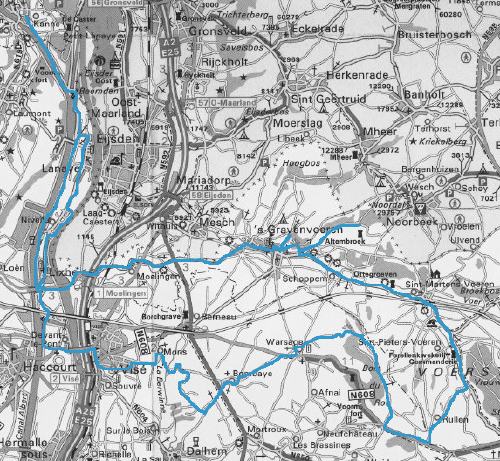
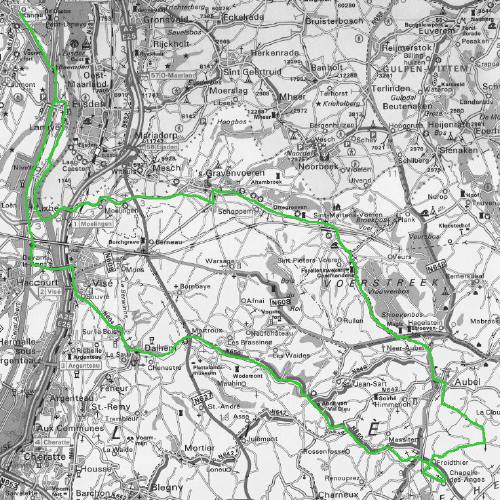
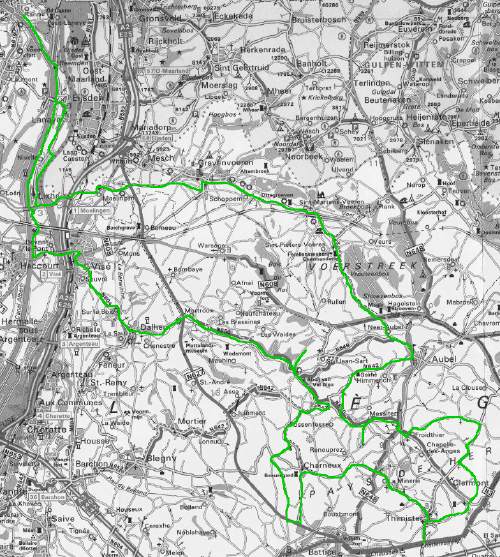
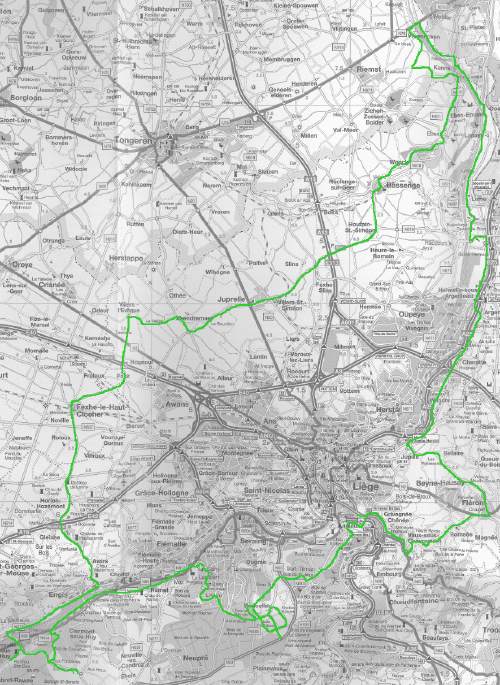
Te warm om te fietsen en te warm om te werken. Knalzon & 32 graden. In de ochtend per trein terug uit Amsterdam naar Maastricht & Kanne. Te warm om te fietsen? Er stond een lekker windje — toch fietsweer. 15.45 – 19.45. Met de laatste kilometers van de touretappe van morgen — dus ook de laatste kilometers van de tourtocht van vandaag. Rustig gereden — en dankzij de oostenwind was de tweede helft supermakkelijk. De Cauberg had ik dit jaar nog niet gereden — saaie helling, lastig als je sprint, niet moeilijk als je rustig rijdt. Kanne – Lanaye – Moelingen – St. Martensvoeren – Ulvend – De Planck – Veursbos – Teuven – Opsinnich – Sippenaeken – Terziet – Cameriger berg – Holset – Lemiers – Orsbach – Bocholtz – Baneheide – Eys – Trintelen – Etenaken – Valkenburg – Berg – Maastricht – Kanne

cycling,nl | July 4, 2006 | 10:50 | Comments Off on 85,5 / 3.47 |

Just reading

I spent the last few days in Amsterdam & I don’t seem to do much more here than reading, just reading, devouring pages of text, for pleasure.

Nicholson Baker, Checkpoint. Baker’s novel about a guy who plans to shoot George W. Bush. The American reviews trashed the book, but I quite liked it, as an intelligent exposition of the sort of Bush-hatred that besets so many people.

Samuel Butler, Erewhon (almost finished). A classic, mentioned often in the literature on science & technology because in the upside-down world of Erewhon machines are outlawed. Enjoyable satire.

Joseph Conrad, Typhoon. Read this one in the Dutch translation and decided to more often read novels in translation: more reading pleasure (that is, if the translation is a good one). I’ve read Conrad’s Nostromo twice in English and still don’t get what it is about, seems all too subtle for my knowlegde of the language. Typhoon is the sort of perfectly built and carefully told narrative, with a main character that you’ll never forget — a story that makes you want to turn back to pre-1920’s literature.

J.G. Ballard, Running Wild. Novella, about murders in a gated community outside London. Now comes across as a sketch or a study or his later novel Cocaine Nights and Super Cannes. (I now see that a new Ballard-novel is announced for september).

Alfred Jarry, Superman (partly). Also in Dutch translation. Funny, hilarious.

Joris van Casteren, In de schaduw van de Parnassus. About twenty interviews with Dutch poets that never made it. Interesting because it sketches how the literary systems works. In these interviews one sees what is thrown out, what is forgotten, these poets had their work published at some point, but then did not stand ‘the test’ of quality, of perseverance, of conforming just that little bit, of time (the fashion changed).

And lots of papers.

Also revisited bits and pieces of Ihab Hassan’s early writings on postmodernism, as they are assembled in The Postmodern Turn. (It amazes me again how fresh those essays are, after so many years, how fresh his way of playing with the essay-form). And scanned through some of Erving Goffman’s The Presentation of Self in Everyday’s Life that I picked up from the Jan van Eyck library.

en,reading matter | July 1, 2006 | 23:02 | Comments Off on Just reading |

Tour de France II

Pietro Caucchioli will be the winner of this years Tour de France. That’s my hunch.

cycling,en | June 30, 2006 | 22:15 | Comments Off on Tour de France II |

Tour de France

The Tour de France has not been my favorite cycling event to watch over the past few years. As many other true cycling fans I prefer the Giro and the Vuelta. The Tour has become overloaded with ‘stress’-factors, the stakes are too high, the riding is often defensive, and the ‘parcours’, with all the flat stages in the beginning, asks for a boring narrative.

When all the news about the big doping affair in Spain began to spread and exert influence, I began to have hope for an exciting Tour, if not because of the riding, but because of all the changes that professional riding is going through at once (and that athletics and football will have to go through too). There are too many interesting sides to this affair, just one of them is that it’s mainly top riders who are involved — no ‘small riders’, no ‘domestiques’.

Today came the big news: all the riders on the Spanish list will not be allowed to start. On the list (here’s a very provisional list: http://www.cycling4all.com/d_news.php): Ullrich, Basso and Mancebo. Ullrich is immediately expelled by his team, Mancebo has immediately resigned from cycling. I don’t know about Basso.

We still do not know if Vinokourov will start, and if he starts he will be under tremendous pressure, because his team is (or was) a key in the whole scandal that’s now unfolding.

I suddenly have high hopes for a exciting Tour — in terms of the course (‘de koers’). Now there will really be about 30 riders who can win. And with this whole doping-story it can only gets stranger and stranger.

The weirdest thing is: David Millar is back for his first day of competition after being expelled from cycling for EPO-use for 2 years. He could be a major contender if he has been able to regain his old form.

cycling,en | June 30, 2006 | 18:47 | Comments Off on Tour de France |

62 / 2.30

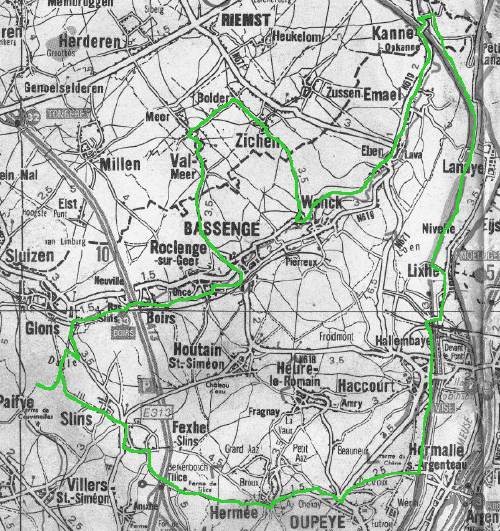
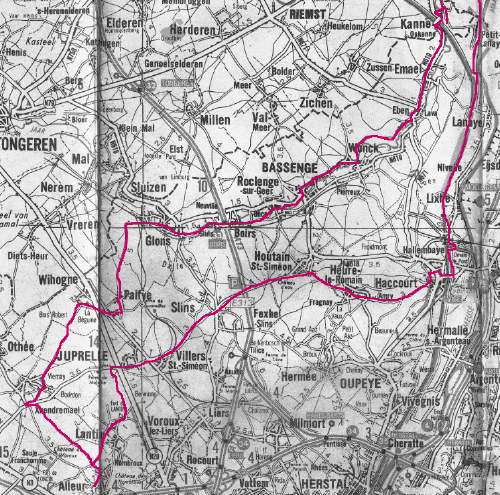
Toch niet voor een lange tocht vertrokken die ochtend, maar in de middag spijt en terug naar Kanne om een rondje te maken alvorens de trein naar Amsterdam te nemen. 15.30 – 18.00. Raar weer, soms erg warm, soms bewolkt, soms zon, flinke ZW-wind. Kanne – Eben – Moulin du Broukay – Bassenge – Houtain St. Simeon – Hermee – (hier een grote weg opgereden en weer omgedraaid, me niet realiserend hoe dicht ik bij Herstal en Wandre was) – Petit Aaz – Oupeye – Hermalle ss Argenteau – Whixhou – Richelle – Dalhem – Trembleur – Mortier – Chenestre – ri. Bombaye – Mons – Vise – kanaal – Kanne

cycling,nl | June 27, 2006 | 11:28 | Comments Off on 62 / 2.30 |

Boogerd koopt een rood-wit-blauwe trui, of een perfecte zondagmiddag

Een perfecte zondag: een mooie wandeling van Kanne naar de Pietersberg en terug, en tussendoor een keer of zeven het in groepjes uiteengereten peleton wielrenners voorbij zien komen. Mooi om ze bovenop de Zonnenberg een voor een boven te zien komen. (De Zonneberg waar je alleen kon komen als je de wandelroutes kent, want alles wat perfect afgesloten en wie zich op verboden terrein begaf kreeg de dame en heer van de bereden politie achter zich aan). J.heeft een paar mooie filmpjes gemaakt. Tenslotte de laatste anderhalf uur voor de tevee om een staaltje onvervalst wielrennen te zien. Ik bedoel: je kreeg heel fraai te zien hoe de koers ook wordt bepaald door allerlei belangen, belangenverstrengelingen, belangenafwegingen, die ook te maken hebben met zaken waarvan een purist zou zeggen dat ze ‘buiten’ de koers horen. Je kreeg perfect in beeld dat ‘de koers’ niet alleen belangeloze lichamen op een fiets betreft die zo hard mogelijk naar de eindstreep proberen te rijden. Iedereen weet hoe ontzettend belangrijk de kampioensschpastrui voor Rabobank is. Ze hebben er de afgelopen jaren te vaak naastgegrepen. De kampioensschapstrui moet ook in de Tour te zien zijn. (Toen De Groot leek te gaan winnen wist je: dus De Groot zal naar de Tour gaan. — Wegens vormcrisis van Thomas Dekker gaat hij inderdaad mee (hoe goed/slecht ligt Thomas Dekker eigenlijk in de ploeg?) Dan komen Boogerd en Sebastiaan Langeveld op kop. Stel je voor je bent Langeveld. Je weet zo goed als zeker dat je volgend jaar bij Rabo zult rijden. Rabo wil de trui. Als je wint kom je in 2007 bij een ploeg waar ze je wellicht voor een te eigenzinnige matennaaier houden (o.i.d.): ‘he, waarom heb jij Boogerd vorig jaar van de winst afgehouden?’ Het is zo ontzettend veel voordeliger om Boogerd te laten winnen: 1. je contract met Rabo is binnen, en voor een hoger bedrag dan eerder is afgesproken. 2. Boogerd doet er persoonlijk nog een leuk zakcentje bij. 3. jij en ook Skil – Shimano hebben er een heel stel vrienden bij en dat kan heel goed van pas komen in de Eneco-tour; en wie weet doet Rabo eens een goed woordje voor Skil – Shimano. Natuurlijk is dat akkoord.

Al die dingen horen bij de koers. Die dingen zijn de koers. Alleen als Langeveld een nieuwe Hinault of Boonen zou zijn, had hij ‘met winst’ kunnen winnen. Alleen als hij zo’n grote meneer zou zijn dat hij volgend jaar gewoon met de vuist op tafel zou kunnen slaan om bij Rabo het absolute kopmanschap af te dwingen. Maar zo’n grote is zelfs Thomas Dekker niet. Deze tweede plaats is veel belangrijker voor zijn carriere (en die van Skil – Shimano) dan de winst.

En dan komt het aan op hoe ‘mooi’ het wordt gespeeld. Nee, niet mooi. De sukkel van een Boogerd vraagt aan Langeveld ‘is het okee?’ terwijl de microfoon van de cameraman zowat voor z’n snufferd hangt. Langeveld gaat volledig overbodig aan z’n bovenbeen voelen (of is dat omdat hij donders goed wist dat hij sneller sprint dan Boogerd en niet vertrouwde dat de als altijd hypernerveuze Boogie zich niet ten onrechte genept zou voelen als hij voor de vorm de sprint aan zou trekken?)

Dit allemaal is de koers. En ja, ik vind dat het niet ten koste gaat van kijkgenot. (Natuurlijk, het moet niet tot saaie koers leiden, zoals de afgelopen jaren in de Tour). Alleen tja, die Boogerd, die heeft dus wel gewoon ouderwets dit kampioenschap in de laatste ronde gekocht omdat hij zich niet zeker wist tegen Langeveld.

Maar vergeet dan niet hoe Langeveld en Boogerd uiteindelijk met z’n 2-en overbleven. Hoe er gereden werd en gepokerd tussen de laatste 8 — de 8 sterksten (Tankink, Wielinga, Moerenhout, Dekker, Boogerd, De Groot, Langeveld en Rooijakkers).

Mooie aspecten van de koers gisteren? Het rijden van die jongen die in Frankrijk rijdt, bij Haribo: die zat al vanaf het begin van de koers voorin! En zo verschrikkelijk hard als er in het begin werd doorgereden.

Het was genieten. Profwielrennen op z’n mooist.

cycling,nl | June 27, 2006 | 11:28 | Comments Off on Boogerd koopt een rood-wit-blauwe trui, of een perfecte zondagmiddag |

36 / 1.52

‘s Avonds vrij laat, een rondje samen met J. 20.30 – 22.30, net bij donker terug. Prachtig rustig zomerweer en nadien twee Hoegaarden op het terras. Alsof het vakantie was. Kanne – St. Pierre – Eben – Moulin du Broukay – Wonck – Bassenge – Houtain St. Simeon – Heure l’ Romaine – Bassenge – Wonck – Zichen – Eben – Kanne

cycling,nl | June 27, 2006 | 11:23 | Comments Off on 36 / 1.52 |

Latour: Aramis

A beautiful book, for various reasons. First of all a wonderfull overview and introduction into Latours view on technology. Secondly a very precise account of how a revolutionary type of metro never gets ‘off the ground’ — because of the love for technology (and other reasons), or rather the lack of it: Aramis is a project that does not go through translations… that is not negotiated enough. (Who loves has to negotiate and change). Thirdly it shows that one can write a true sociological novel, or do novelistic sociology. (A bit what Powers does from the side of the novel — Latour and Powers love each others work).

“By definition, a technological project is a fiction, since at the outset it does not exist, and there is no way it can exist yet because it is in the project phase.” p. 23

“Give me the state of things, and I’ll tell you what people can do — this is how technology talks. Give me the state of human beings, and I’ll tell you how they will form things — this is the watchword of sociology. But both of these maxims are inapplicable! For the thing we are looking for is not a human thing, nor is it an inhuman thing. It offers rather, a continuous passage, a commerce, an interchange, between waht humans inscribe in it and what it prescribes to humans. It translates the one into the other.” p. 213

“The work of folding technological mechanisms can go from complication to complexity. This is because technological detours go from zero to infinity according to whether the translation goes through intermediaries or through mediators.” p. 219

Bruno Latour, Aramis or the Love of Technology, Harvard UP, Cambridge &c., 1996 (1993)

en,quotations,research | June 24, 2006 | 16:57 | Comments Off on Latour: Aramis |

St. Bonaventura

“The thirteenth-century Franciscan, St. Bonaventura, said that there were four ways of making books: ‘A man might write the works of others, addding and changing nothing in which case he is simply called a ‘scribe’ (scriptor). Another writes the work of others with additions which are not his own; and he is called a ‘compiler’ (compilator). Another writes both others’ work and his own, but with others’ work in principal place, adding his own for purposes of explanation; and he is called a ‘commentator’ (commentator) … Another writes both his own work and others’ but with his own work in principal place adding others’ for purposes of confirmation; and such a man should be called an ‘author’ (auctor).’ ”

Quoted in Elizabeth Eisenstein, The Printing Press as an Agent of Change, Communications and Cultural Transformations in early-modern Europe, Cambridge UP, 1979, p. 121/122

en,quotations,research,ubiscribe,writing | June 24, 2006 | 16:38 | Comments Off on St. Bonaventura |
« Previous PageNext Page »
This work is licensed under a Creative Commons Attribution-NonCommercial-ShareAlike 2.5 License. | Arie Altena