Precies het ritje dat ik nodig had: met veel stukjes die ik niet eerder reed. Eigenlijk is het landschap rond Tongeren erg mooi, vreemd dat ik er nauwelijks heb gereden. Het zal zijn dat ik de eerste keer niet de goeie routes vond en de verkavelingswegen met een laag modder waren bedekt. Nu, met een laagstaande septemberzon, de slingerende weggetjes en het vele groen, is het ideaal fietsterrein. Voornamelijk de fietsrouteknooppunten gevolgd. Vaak stilgestaan. 16.30 – 20.00. Kanne – Vroenhoven – Lafelt – Vlijtingen – Grote Spouwen – Alden Biesen – Rijkhoven – Werm – Vrijhem – Kolmont – Haren – Widooie – Otrange – Lauw – Herstappe – Rutten – Hamal – Sluizen – Millen – Val-Meer – Zichen – Kanne
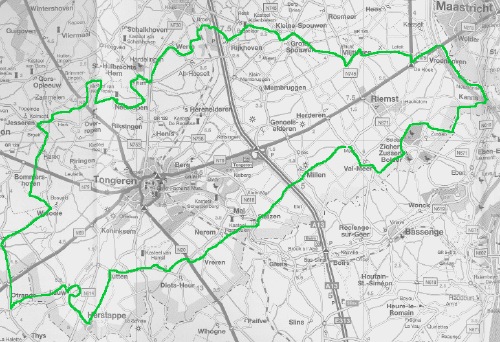
(Het kaartje is niet helemaal correct — geen idee wat voor bochtjes die knooppunten-fietsroute allemaal maakt, en niet alle fietspaden staan op de kaart als je het mij vraagt).
Rob van Kranenburg is back to blogging: http://robvankranenburgs.wordpress.com/
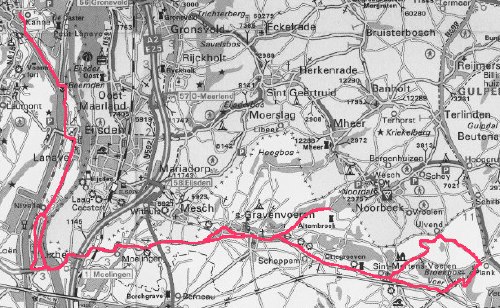
Prachtige warme dag. Lezen in de tuin. Klusjes. Wat werk. Rijden om 16.30. Een van die dagen waarop je je al fietsend realiseert dat je veel liever in de tuin zou zitten met bier en boek — en dat gevoel verdween niet. In Gravensvoeren zie ik een nieuw verkeersbord: linksaf naar Mheer en Altenbroek. Zouden ze dat stukje door het bos hebben geasfalteerd? Nee dus. Kanne – Lanaye – Lixhe – Moelingen – Gravensvoeren – Altenbroek v.v. – St. Martensvoeren – Ulvend – De Plank – Crinsdael – St. Martensvoeren – Gravensvoeren – Moelingen – Lixhe – Lanaye – Kanne
I have now visited Dublin three times and a larger part of my recollections of Dublin consist of sitting on a bus or sitting in a car going from one end of the city to another. Dublin is not an easy city to get around in. The city centre may be fairly small, and places like the grounds of Trinity College very agreeable, the rest is a nightmare of cars, cars, cars, and the public transport is absolute shit (‘sheit’). Only if you happen to live near a DART station and have to go somewhere near a DART station it’s okay. But the DART goes from Howth to Greystones, along the coast, which is great if one likes to go for a cliff walk (from Bray to Greystones or v.v.) and not so great if one stays in either Lucan or Blanchardstown.
But… the cycling scene seems to grow. Not only are there more cycling lanes, I have the impression I saw more cyclists than a year ago. I always have to look at the bikes in cities that I visit & I’m often (if not always) impressed by the courier-scene. Most of the bikes in Dublin are cheap mountainbikes and city-bikes — often extremely dirty. (One wonders if it’s worth while to clean one’s bike in Ireland where it might rain every day). Last year I think I saw one track bike.
This year I spotted:
— a guy with a small rucksack, in full cycling gear, going downhill a big road, to the north of Dublin, on a track bike. Yes. He rode pretty fast. Impressive. It looked like he came back from a race, and still had a long way to ride.
— a courier track bike with a chainwheel (is that the right word for: ‘tandwiel’) on both sides of the wheel: so one has two gears, pre-derailleur style, when one puts the wheel in the other way around.
— a girl on a custom blue racing bike, sawed-off ‘guidon’, brakes, a full pignon, without shifters or a derailleur — though with the spring & little wheels to keep the chain under pressure. Changing gear would be possible by hand.
— her boyfriend on a beautiful trackbike with sawed-off ‘guidon’.
— and for the rest about five or six couriers going through the traffic on track bikes — which I think is more impressive, conisdering the Dublin traffic, than the New York-couriers.
A fairly large part of my stay in & around Dublin was taken up by ‘family-related-stuff’ — the family of F. that is. F’s godson (son of her sister) was christened on sunday. I attented 2 masses: saturday evening mass & the christening on sunday. I was amazed, if not shocked by how quick these masses were done over with. Rushed is not even the right word. On saturday there was literally no pause between the blessing at the end and the words “that’s it, see you next time”. The priest hurried off to see the football match. The whole thing took 35 minutes. The only ‘music’ was the sound of coins in the collecting baskets, heard while the prayer for the confession of the sins was said. One positive thing: the reading from the Scriptures were done by women.
I have a protestant background & as a kidI used to go to church with my parents every sunday. We went to a beautiful church (the Grote Kerk in Almelo), where at that time Rev. Otten was preaching. There was always an elaborate liturgy — Otten would say or sing a sentence, the community would answer, then the organ, then the small choir. Very well orchestrated. The same thing for the singing of Psalms & Songs. A few years later the small choir became so good that they would perform things like the Angus Dei as composed by — I think — Buxtehude. So although a protestant church, there would be a very clear sense of tradition and beauty that a lot of people only associate with the Roman Catholic church. The sermon — as far as I remember — was really an interpretation of the Scriptures, often touching upon Jewish traditions (that Otten was particularly interested in). It’s not that I liked going there (I rather did something else on a Sunday morning), but these sunday mornings have certainly had a positive effect on my ideas of the Church and religion.
The christening on sunday took place in a church in Lucan. Renovated a few years back, the organ was taken out. The music during the christening came from a tiny cassetterecorder (and was some sort of Irish new-agey-folk-music). The church owned a beamer to project texts in big white letters on Powerpoint-blue background against the wall. (It was not used during the christening). The priest did not know the name of one of the two kids being christened and basically no-one, including the priest had any clue of the order of the proceedings — the priest flipping back and forth through the leaflet and at one point asking a person to read from the Scriptures, the person being very surprised since the indicated passage was not his to read. (F. — who’s a firm believer — was disappointed about this priest).
Well. I guess all this only showns how deep Catholicism is ingrained in Irish society.
— walk: Blanchardstown ‘Waterville’ – Blanchardstown Village, busstop
— bus: Blanchardstown Village – Dublin Airport
— plane: Dublin Airport – Schiphol
— train: Schiphol – Amsterdam Lelylaan
— tram: Amsterdam Lelylaan – Jan-Pieter Heijestraat
[food in Amsterdam, picking up the mail &c.]
— bike: Wilheminastraat – Amsterdam Centraal
— train: Amsterdam Centraal – Maastricht
— walk: Maastricht train station – Jan van Eyck Academy
— bike: Jan van Eyck Academy – Kanne
Not counting waiting times (long, as I arrived far too early at the airport), walks at the airports and stations, & walks so short they’re not worth mentioning.
No delays whatsover. Gorgeous weather.
I read two papers (Guardian of saturday & tuesday), half a Henry James story, checked 51 e-mails, wrote 4 and waited till I arrived. It took the whole day, from 10 in the morning till midnight.
Back to Amsterdam for a meeting of the jury of the ISOC Awards: http://www.isoc.nl/awards/. I’m a jury-member for the ‘Internet & the arts’-award. Nominees are:
Jan Robert Leegte: http://works.leegte.org
Joes Koppers: http://usemedia.com
Wilfried Houjebek: http://socialfiction.org/palimpsest
Peter Luining: http://ctrlaltdel.org
Niels Schrader: http://www.nielsschrader.de
Danielle Roberts: http://www.numuseum.nl
On friday I’ll fly to Dublin for a short visit. I’ll be offline for a few days then.
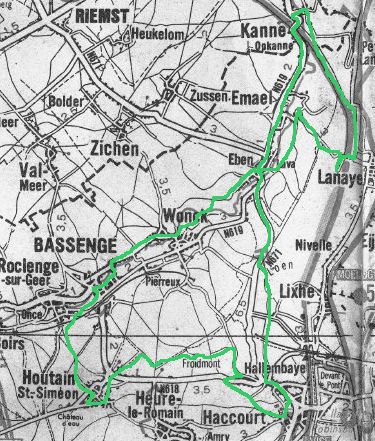
Ochtendrondje, 9.15 – 10.40. Een lekker zonnetje, fikse zuidenwind (draaiend). Kanne – Eben – Halembaye – Haccourt – Rue Riga (mooi stukje) – bij grote weg rechts en bijna meteen schuin oversteken omhoog – Froidmont – Houtain St. Simeon – Bassenge – Wonck – Moulin Broukay – St. Pierre – Kanne
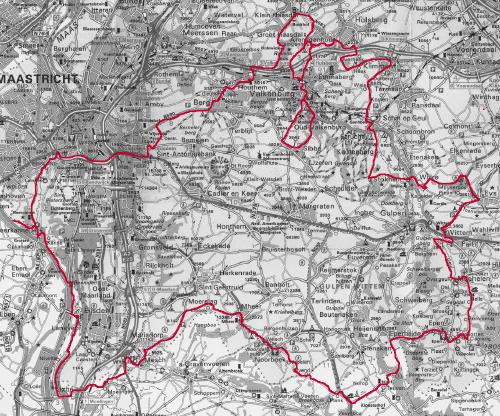
Eindelijk zeggen de weersvoorspellingen: droog en zon en wolken. 17 graden, lekker fietsweer ondanks fikse westenwind. 15.00 – 19.30. Rondje Mergelland — leuk, de Limburgse klimmetjes, maar ik ben toch echt veel meer verslingerd geraakt aan het land van Herve, het Luikse, de Hesbaye en de Voerstreek. En echt, de Dode Man en de Keutenberg zijn ‘peanuts’ vergeleken bij de Houtepenklims. (Alleen die Eyserbosweg, daar kom ik dit jaar niet lekker tegenop). Vlak voor de Geulhemmerberg komt een clubje van “Math Salden, Limbricht” voorbij, ik wilde in het dal blijven, zij gaan bergop, om het hardst & ik dus ook. Kijken waar ik sta. Ik kom als vierde (van 10) boven.
Kanne – Lanaye – Lixhe – Moelingen – Mesch – Moerslag – Libeek – Mheer – Noorbeek – Vroelen – De Plank – Teuven – Gieveld – Eperheide – Epen – Mechelen – Partij – Wijlre – Eys – Eyserbosweg – Wijlre – Stokhem – Dode Man – Keutenberg af – Schin op Geul – Walemmerberg – Walem – Klimmen – Valkenburg – Hellebeuk – Hulsberg – Arensgenberg – Valkenburg – Sibbengrubbe – Daalhemmerweg – Valkenburg – Bosstraat – Schimmert – Klein Haasdal – Raarberg – Houthem – Geulhemmerberg – Berg – Maastricht – Muizenberg – Kanne
Cycling4all has scans online from the faxes that doctor Fuentes sent. I must say that seeing this evidence changes my perception of the case. Until now I’d be stressing the fact that persons are accused, found guilty and put outside the race before getting a chance to begin a proper juridical case. (Of course the whole affair still is a terrible mess legally seen).
I wonder what will happen with cycling — and with other sports (Fuentes had soccer-players and track-athletes as clients as well!). But I will enjoy the races just as much as ever. There will always be doping, the Fuentes-case is all part of the story of cycling & I love to follow that story. I’d wish it was less dirty, but I still enjoy the race.
I enjoy the race when my favorite wins. I also enjoy the race when my favorite does not win.
http://www.cycling4all.com/index.php?content=d_news13z.php.